The Genesis of an Occasion for the Arts *by Jim Anthony

J. Ricks Wilson came to Williamsburg in the late ’50s to work in merchandising at Colonial Williamsburg. A classically trained singer, he was a member of the Bruton Parish Choir and a lover of fine music. He was a great fan of the Norfolk Symphony (the name of which was later changed to “The Virginia Symphony”) and had a wish to bring it here for the first time.

In pursuit of that dream, in June of 1969 Ricks and his wife Marion had a small dinner party at their home, which was at that time at the James Moir house on Francis Street. Their guests were George and Margaret Wright, Peter and Jean Brown and Mr. and Mrs. Russell Stanger. George and Peter were fellow executives of Colonial Williamsburg; Russell Stanger was the conductor of the Norfolk Symphony.

The only adequate venue in Williamsburg that came to mind that evening was Phi Beta Kappa Hall, on the campus of the College of William and Mary, and so the discussion centered on that facility and what enhancements to the presence of the Symphony might be made to make it a brilliant evening. Someone present remarked that “Phi Bete” had considerable lobby space, not only as one entered the building, but between the side walls of the auditorium and the outside walls of the building.

Why not, then, invite several artists to bring and display their paintings and sculptures in these lobby spaces. At the expression of that idea, it was George Wright who exclaimed,

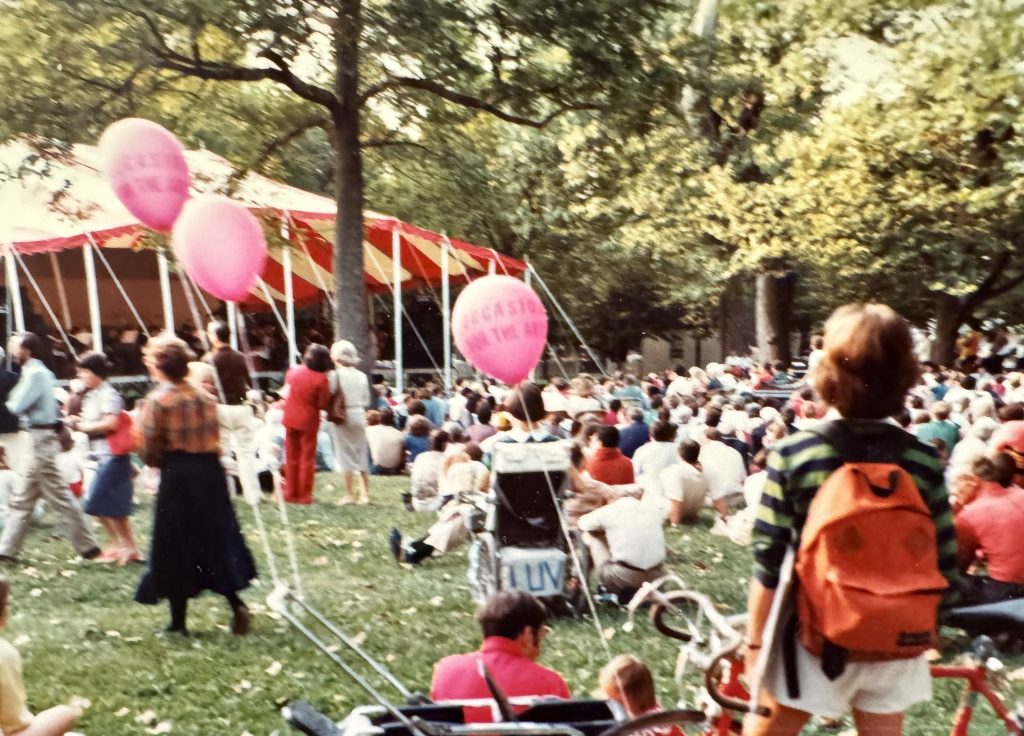
“That would be quite an OCCASION FOR THE ARTS!”

Ricks knew that I had been involved in entertainment in Williamsburg for some years, beginning with the Lions Club minstrel shows and moving on to the Williamsburg Players, producing after-dinner shows for conventions, etc. He sensed that I should be involved in this effort.

In the first week of August Ricks invited me to a breakfast attended by about a dozen gentlemen of the community to whom he had explained his dream — and who could reasonably be expected to be financial sponsors. Finally someone (I guess it was Ricks) asked me if I would head up the effort.

For some twenty minutes I had sensed it was going to come to this and had been considering my response.

I said no.

I told them that “Phi Bete” had less than 800 seats, that it would take the efforts of a staff of at least twenty people to take care of all of the detail to produce such an event, and that I viewed the event, as they described it, as an elitist affair and accordingly would not wish to be involved.

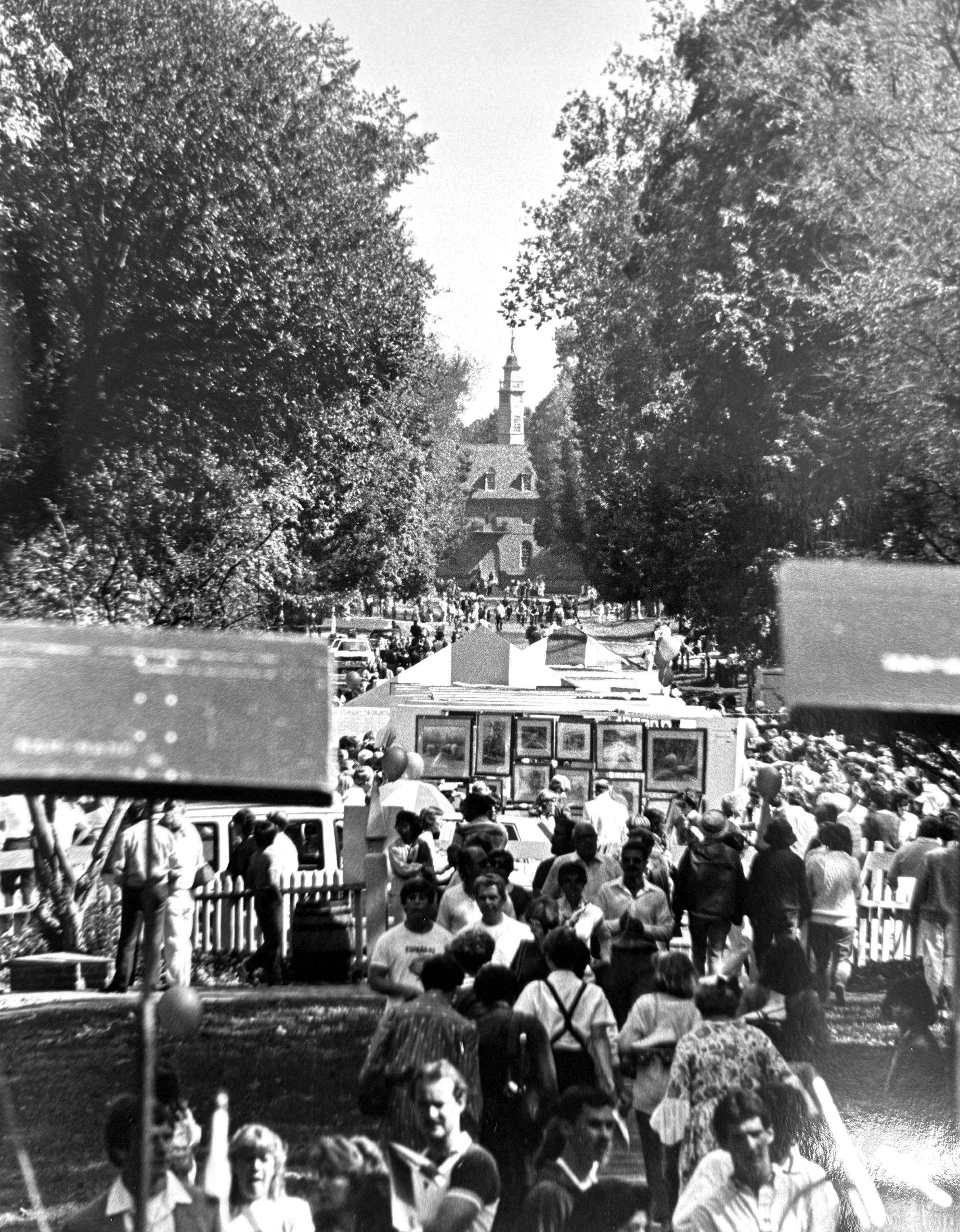
“However,” I said, “if we could secure permission from the city, the college and Colonial Williamsburg to use the first block of the Duke of Gloucester Street and the Ancient Campus … I would be willing to produce a block party for the arts for the entire community to enjoy.

Everyone met this idea with acclaim and we adjourned very quickly, with Ricks asking me if I would come with him to his office to begin organizing the effort.

The first thing I did was telephone the National Weather Service and ask them which Sunday in the early fall stood the least chance of inclement weather. After a little research they called me back to say that the first Sunday in October would be the best. October 1, 1969, was seven weeks away.

Then I blocked out the Symphony and got them working on a matching fund grant. Their fee was $5,000, of which we would have to pay $2,500. (We didn’t know anything about applying for grants; they applied for it.)

The next thing I did was call Carlton Abbott to tell him about the project and ask him to organize a static arts show component.

Carlton is really two people: at once he is arguably the most outstanding and prolific architect in our community and one of the finest and most prolific two-dimensional artists in Virginia.

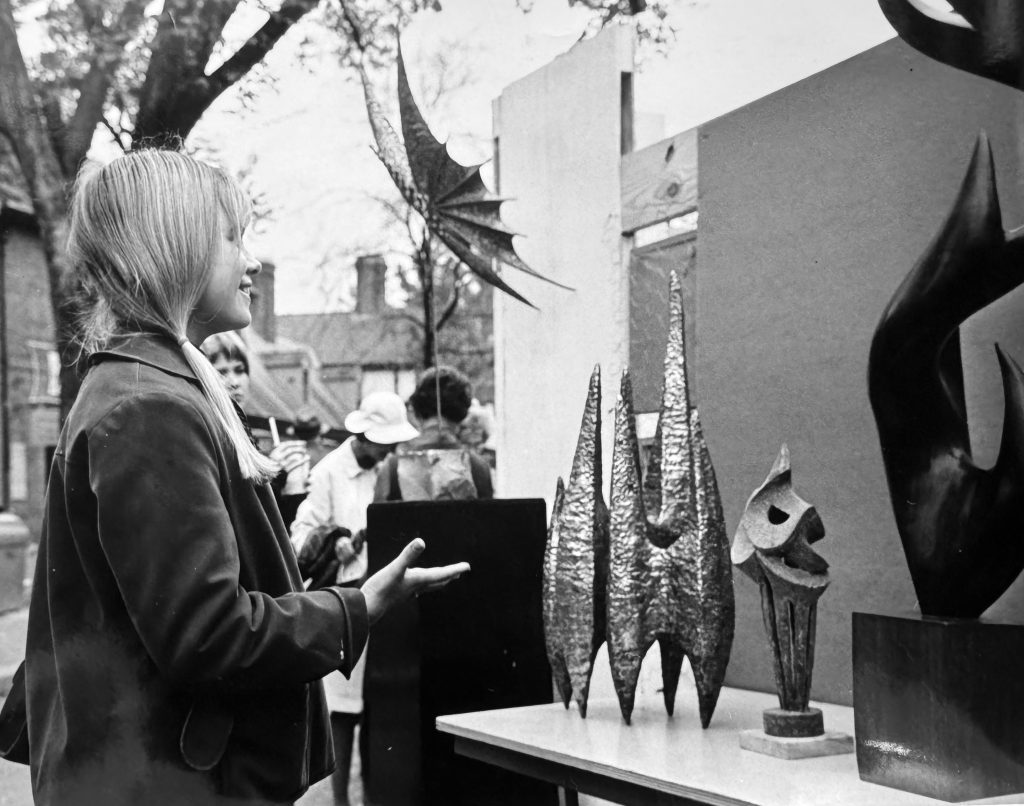
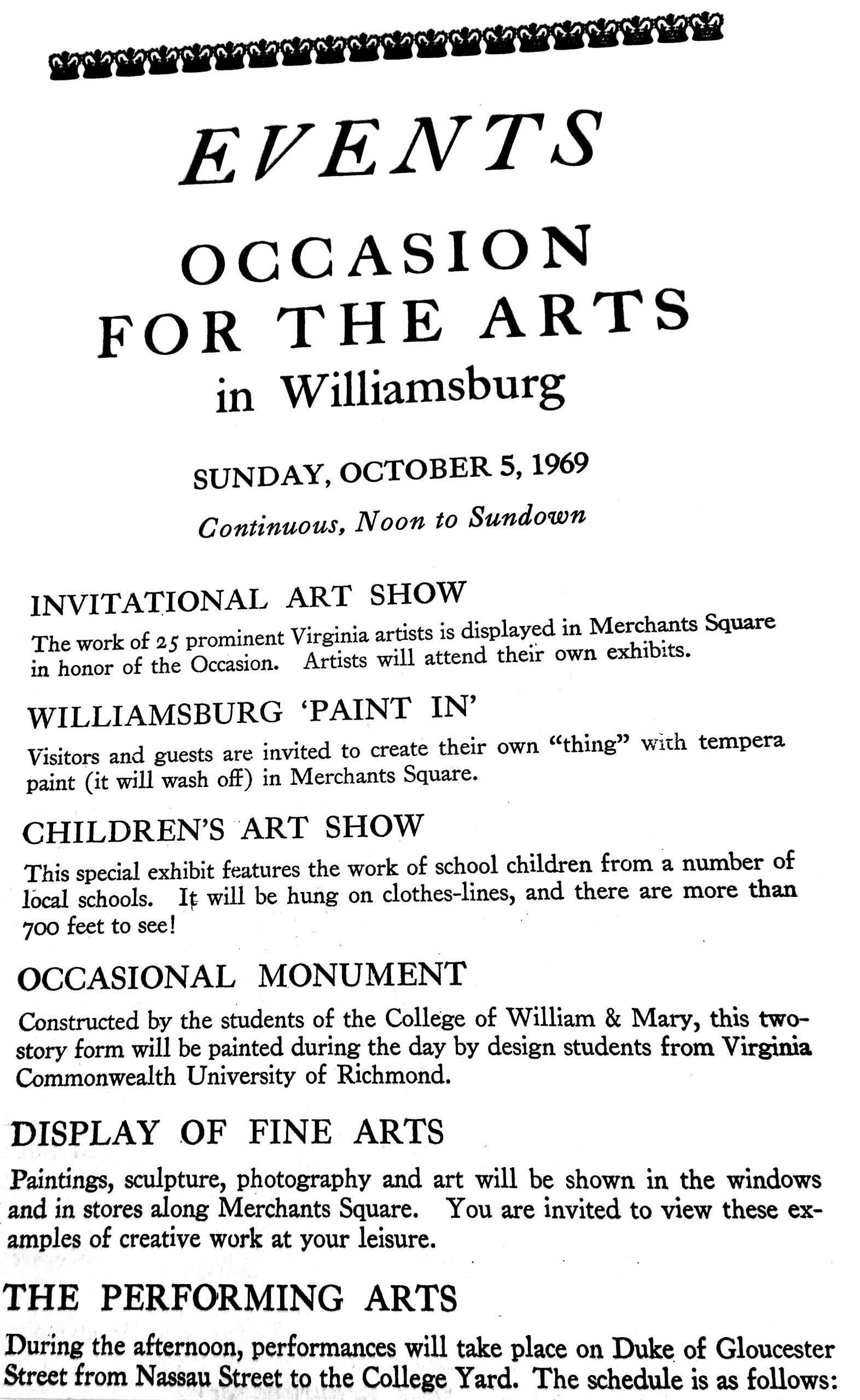
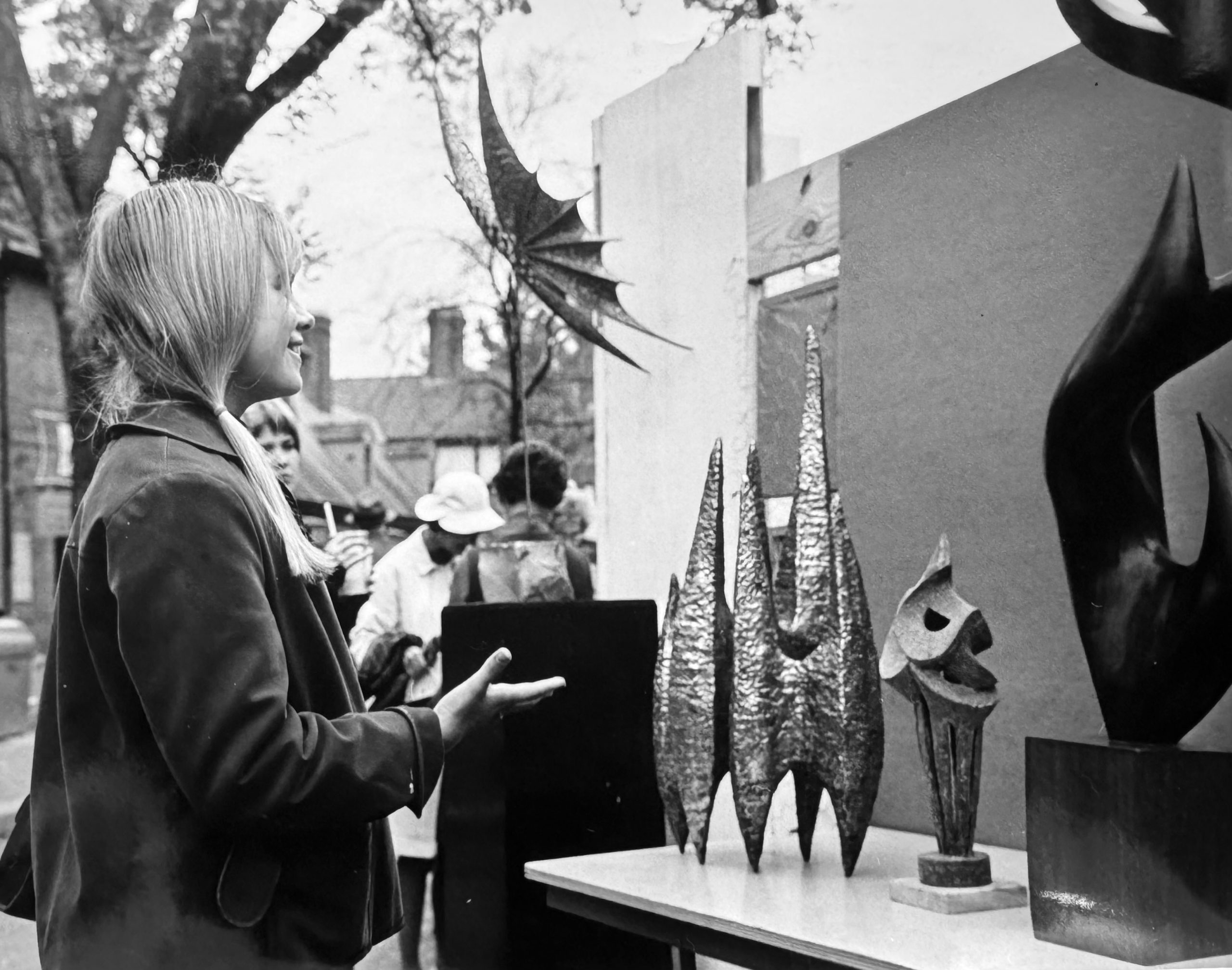
Carlton simply called on his artist friends to come and display (and sell) their work. All but Carl Roseberg, long-time arts faculty member of the College, displayed work marked “Not for Sale.”

I think we had 26 artists that first year of 1969.

I think we had 42 or 43 in 1970.

By then, however, we were getting dozens of complaints from people saying, “My nephew is a better artist than any of these!” and so we became a juried show, with the juror living at least a long-distance phone call away.

The only caveat I insisted upon with the juror was that the ratio of the invitee list not exceed one craftsman to two artists, in an effort to prevent the event from becoming an “artsy-craftsy show.”

Until into the ’70s, producers of art shows were expected by the artists and craftsmen participating to provide facilities for showing their work. In 1969 the artist’s tent, which is ubiquitous today, had not been invented.

How then to present the artists?

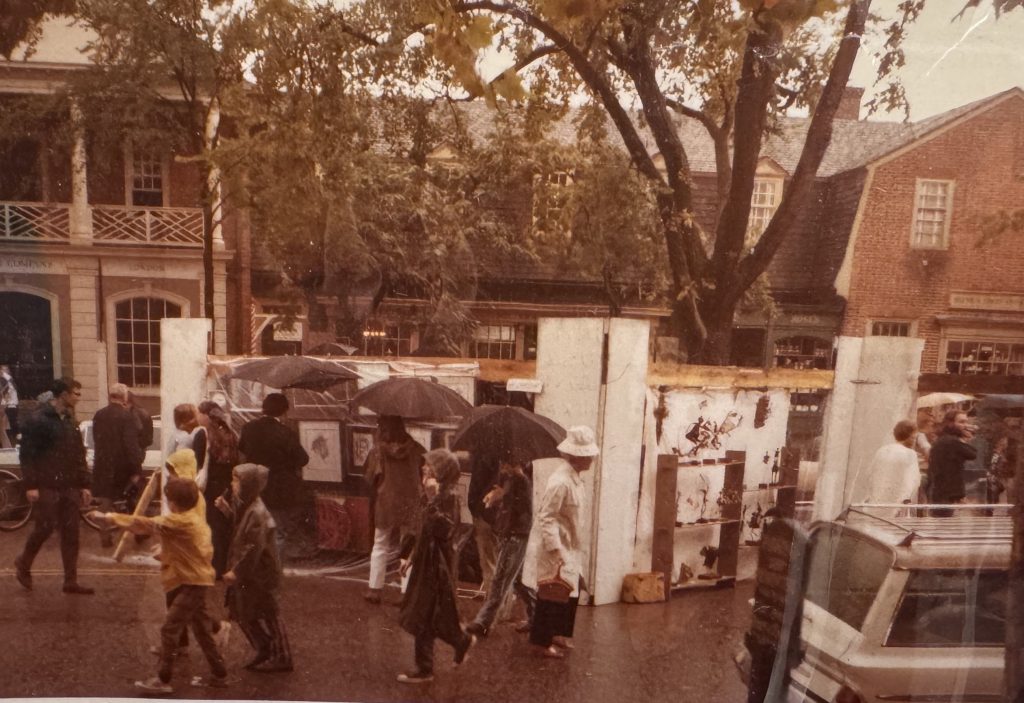
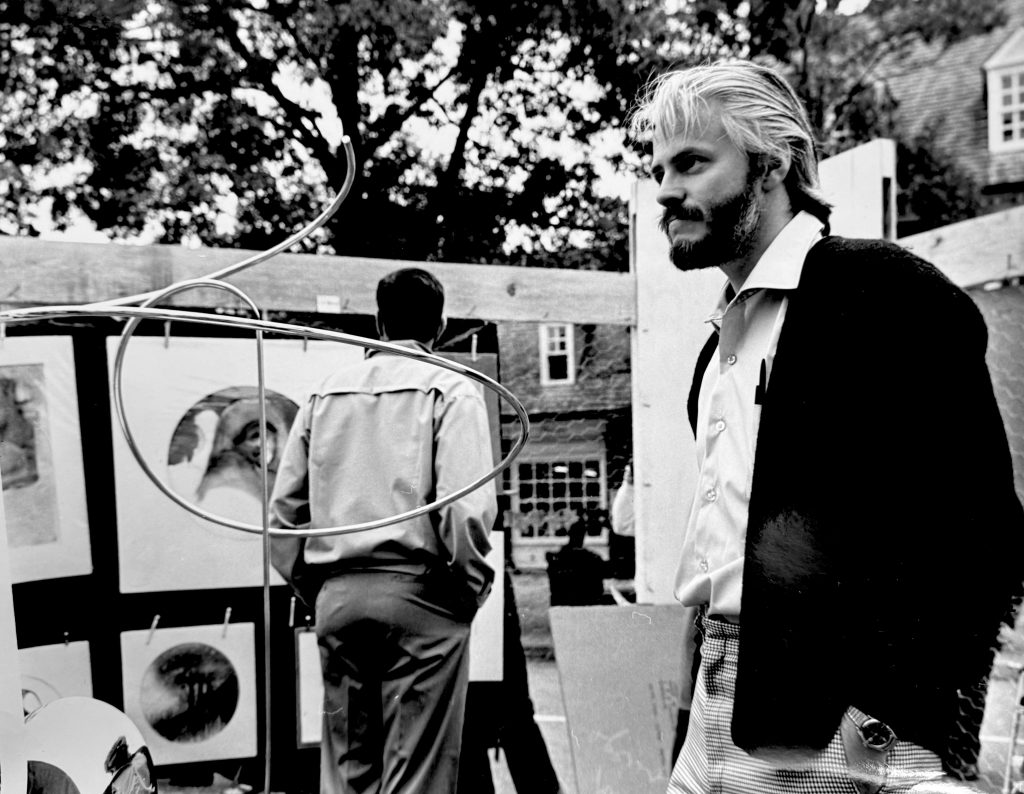
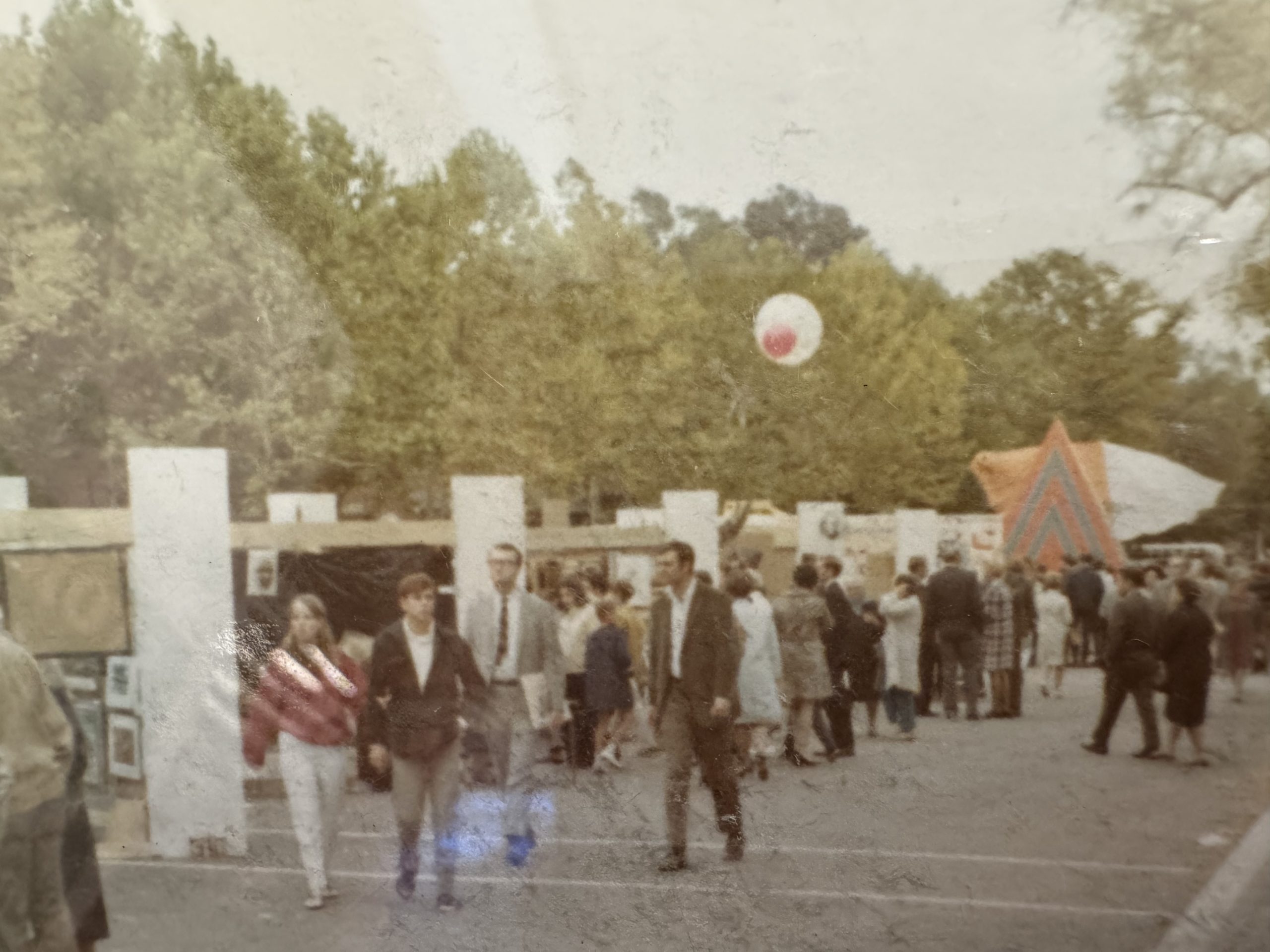
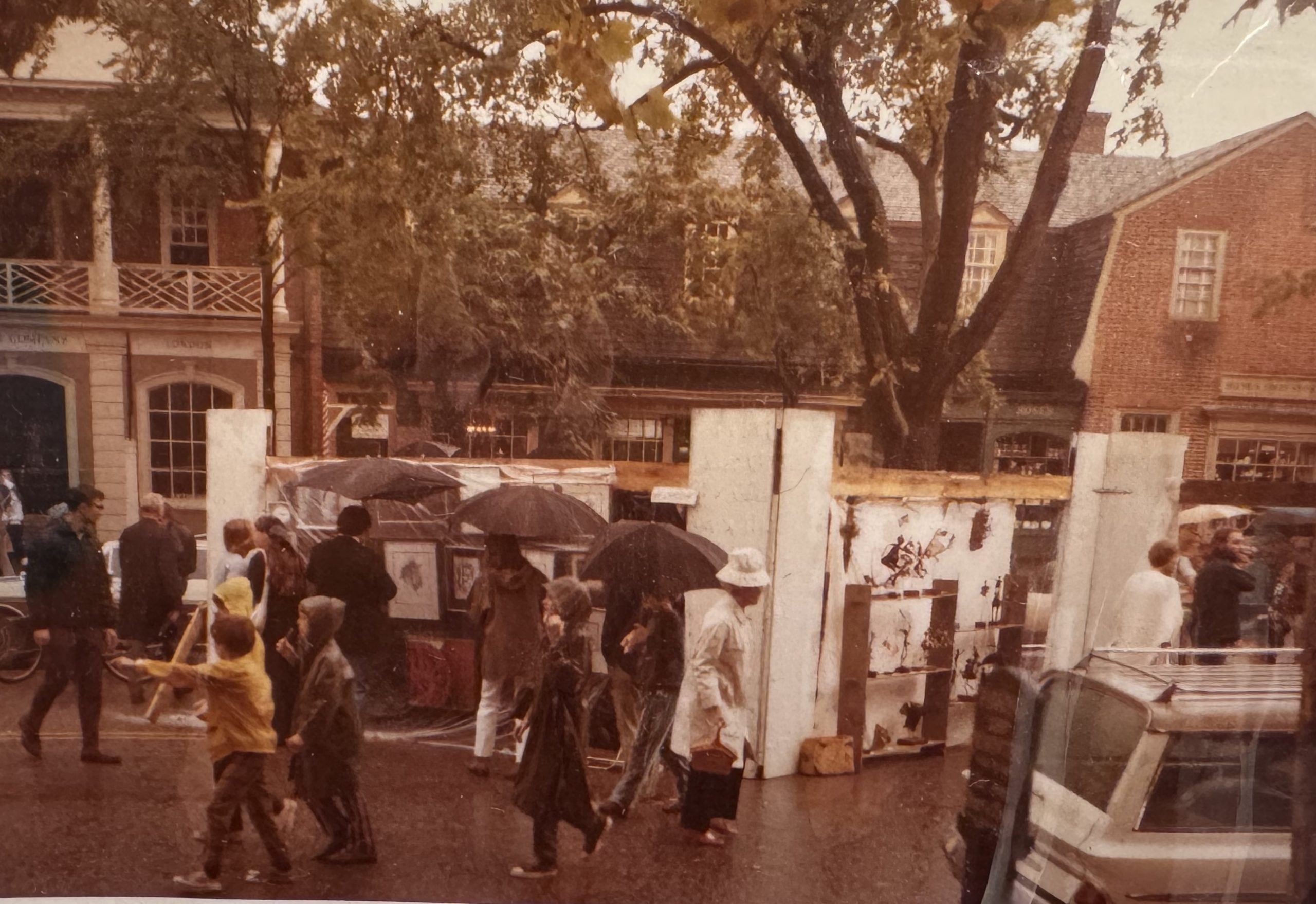
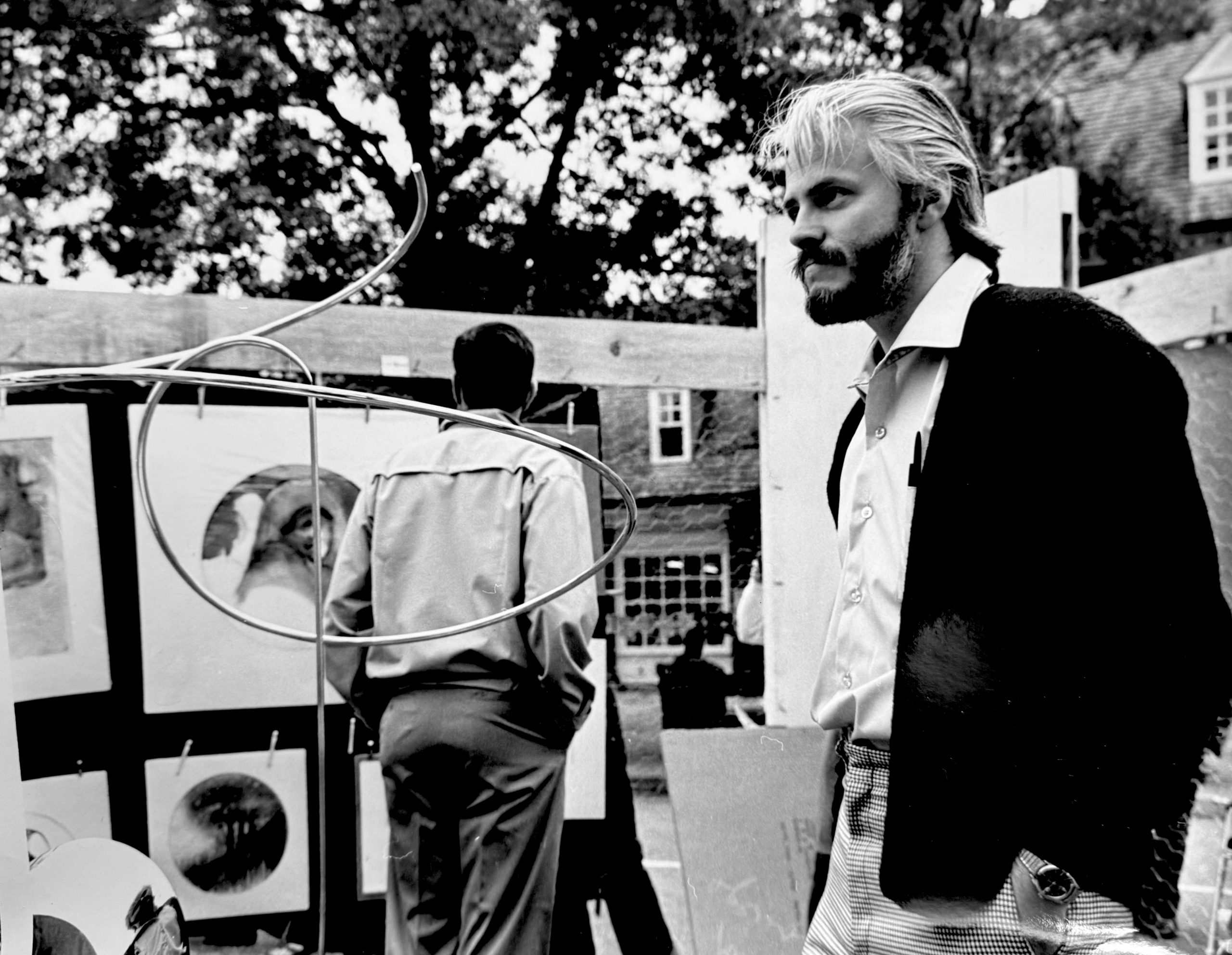
Carlton came up with a beautiful, although labor-intensive idea. Inspired by Thomas Jefferson’s serpentine brick wall at the university, he devised our “zig-zag” structure in the middle of Duke of Gloucester Street.

It was wooden, eight feet high and each section sixteen feet wide, covered with chicken wire and giving each participant 128 square feet of display space. Each section was attached at right angles so the whole structure supported itself.

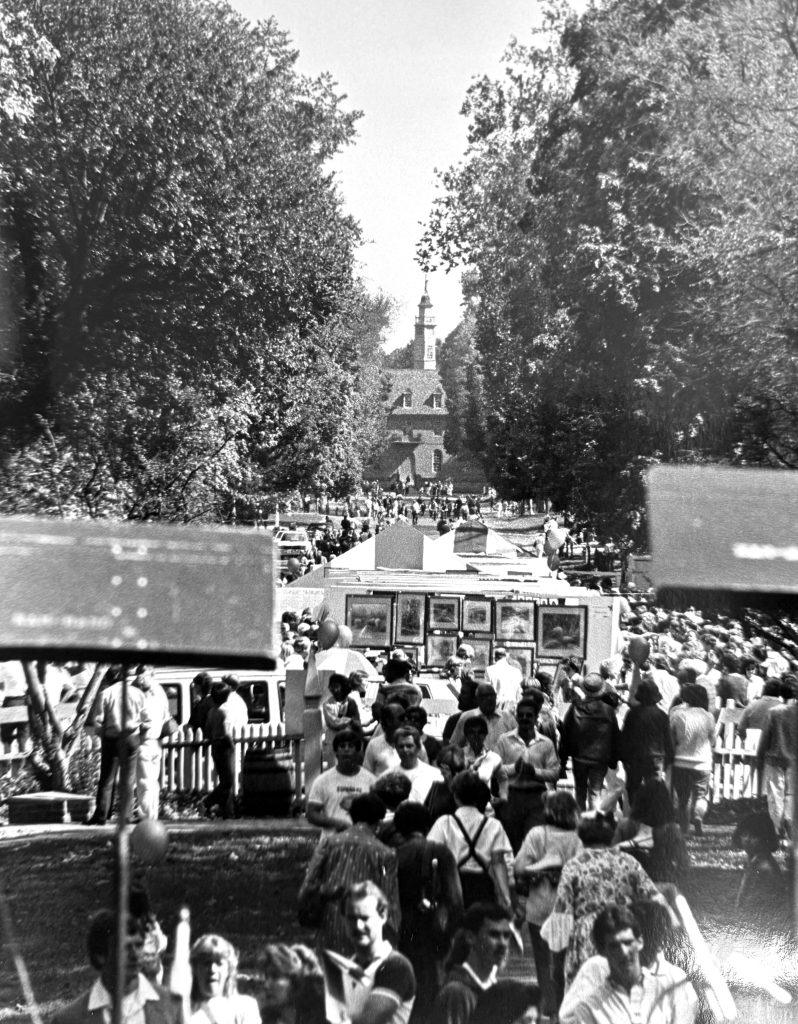
The fourth thing I did in 1969 was go to the architecture office of Colonial Williamsburg and get a plat of “downtown Williamsburg” (what would become Merchants Square). Then I calculated how many people we could accommodate.

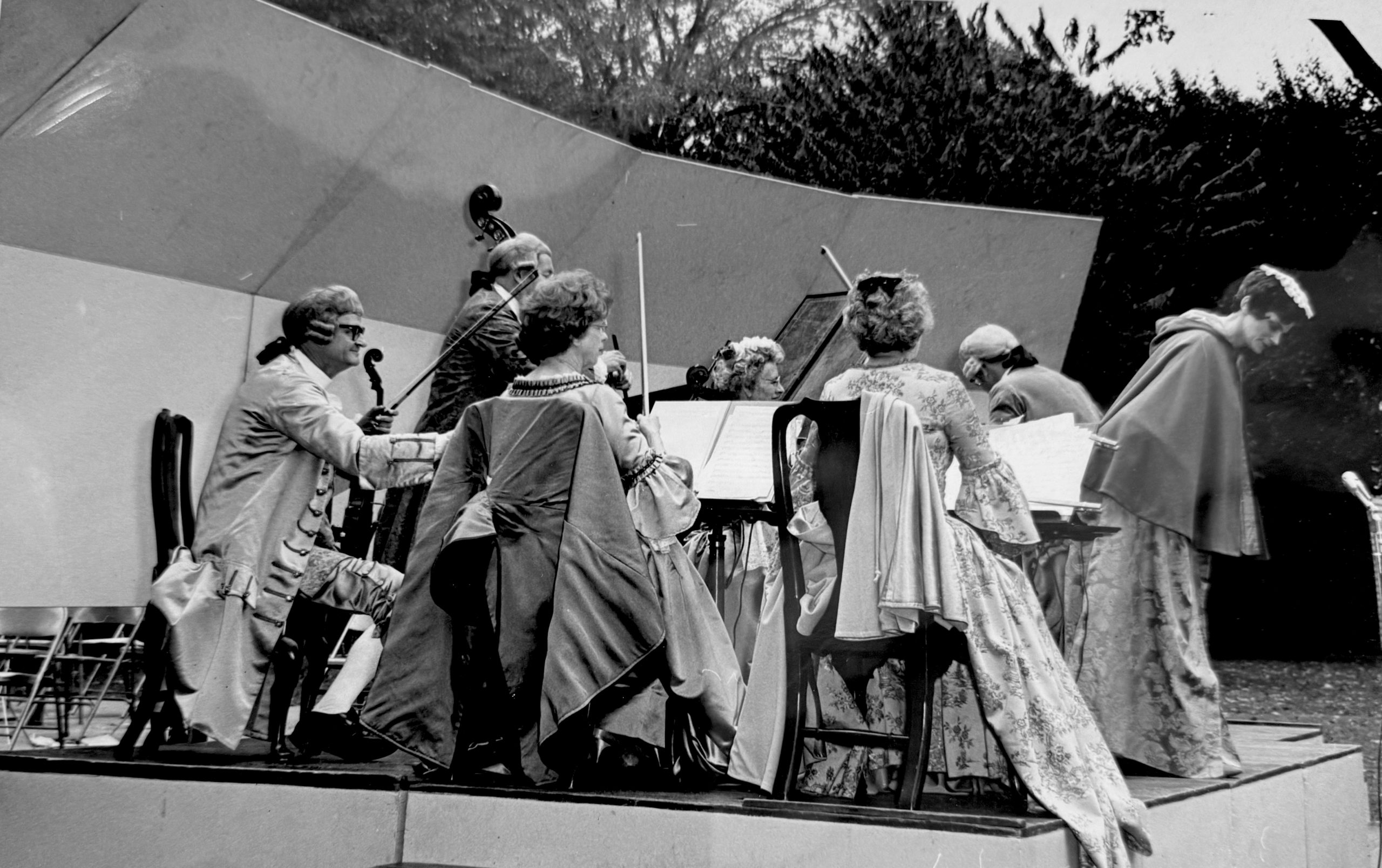
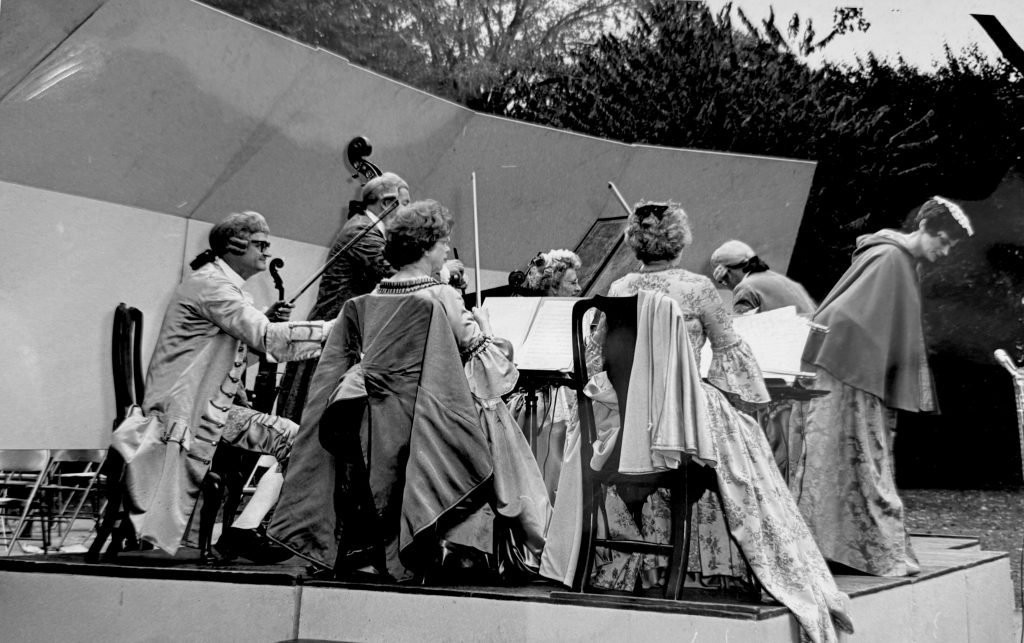
In addition to being the producer, I handled the performing arts component. The Symphony performance would be the capper.

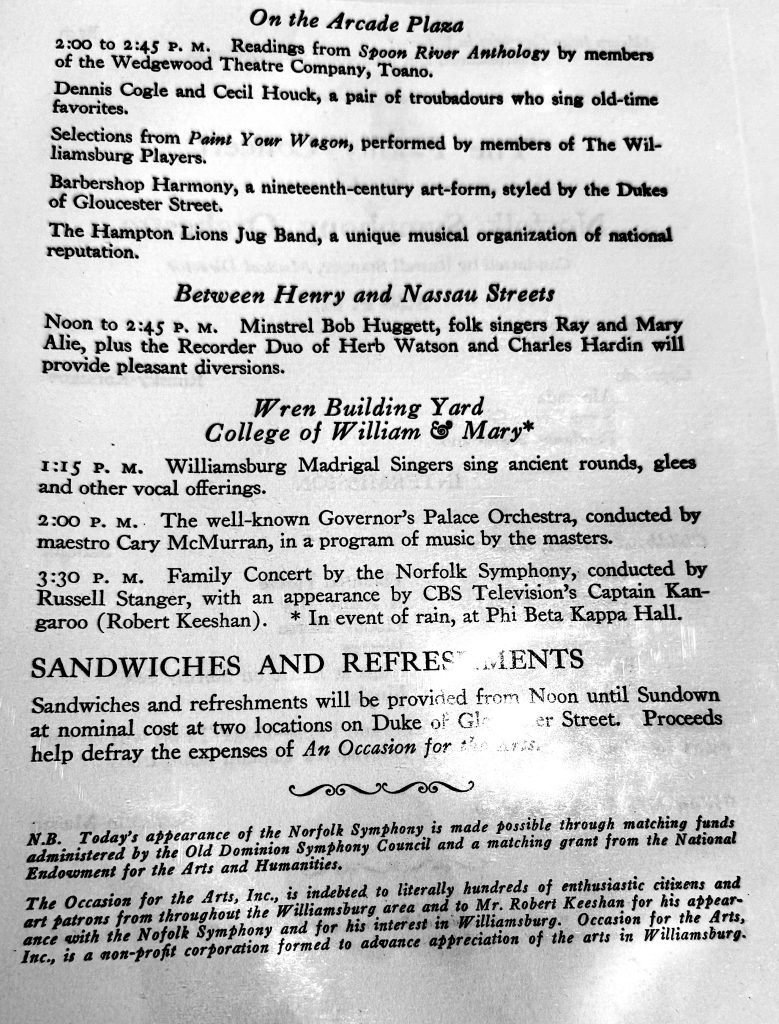
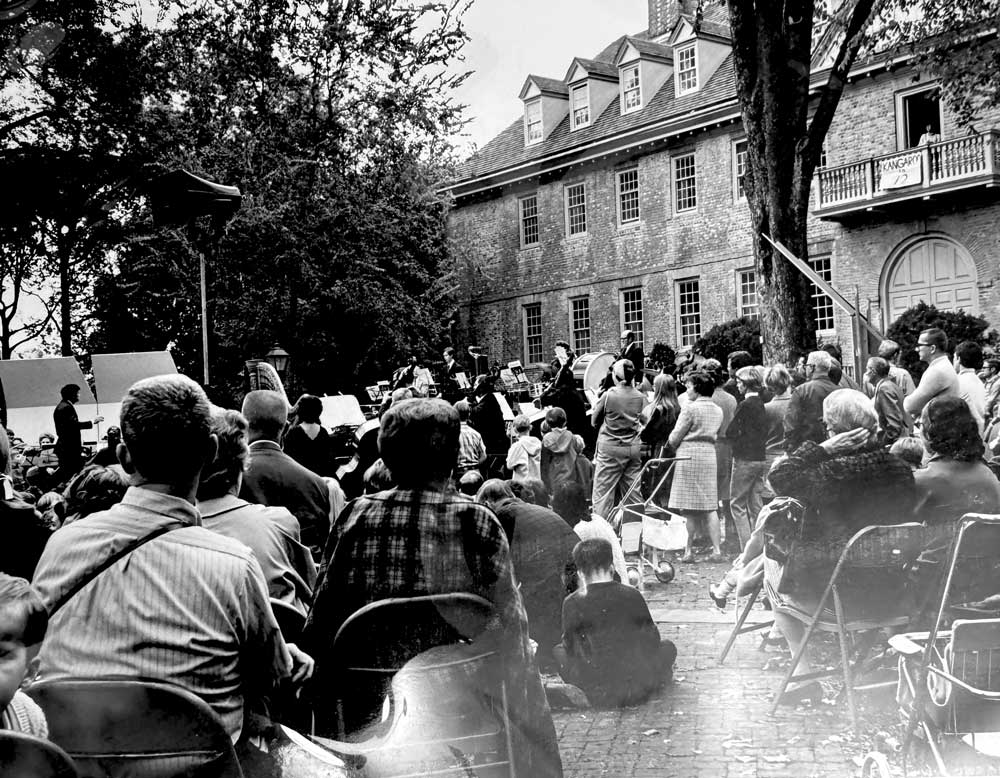
The greatest place to put the Symphony would be in front of the Wren Building.
There was no professional staging in Williamsburg then, so we built a platform with a simple wooden framework and plywood sheets. The College supplied thousands of folding chairs and Colonial Williamsburg provided the public address system.

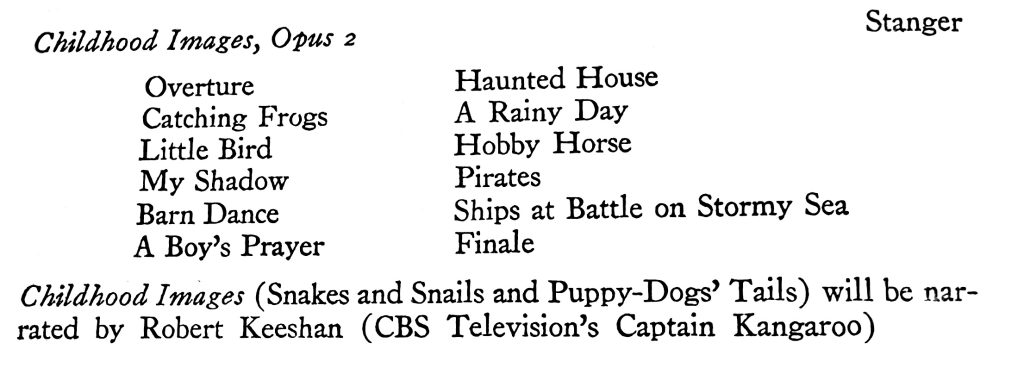
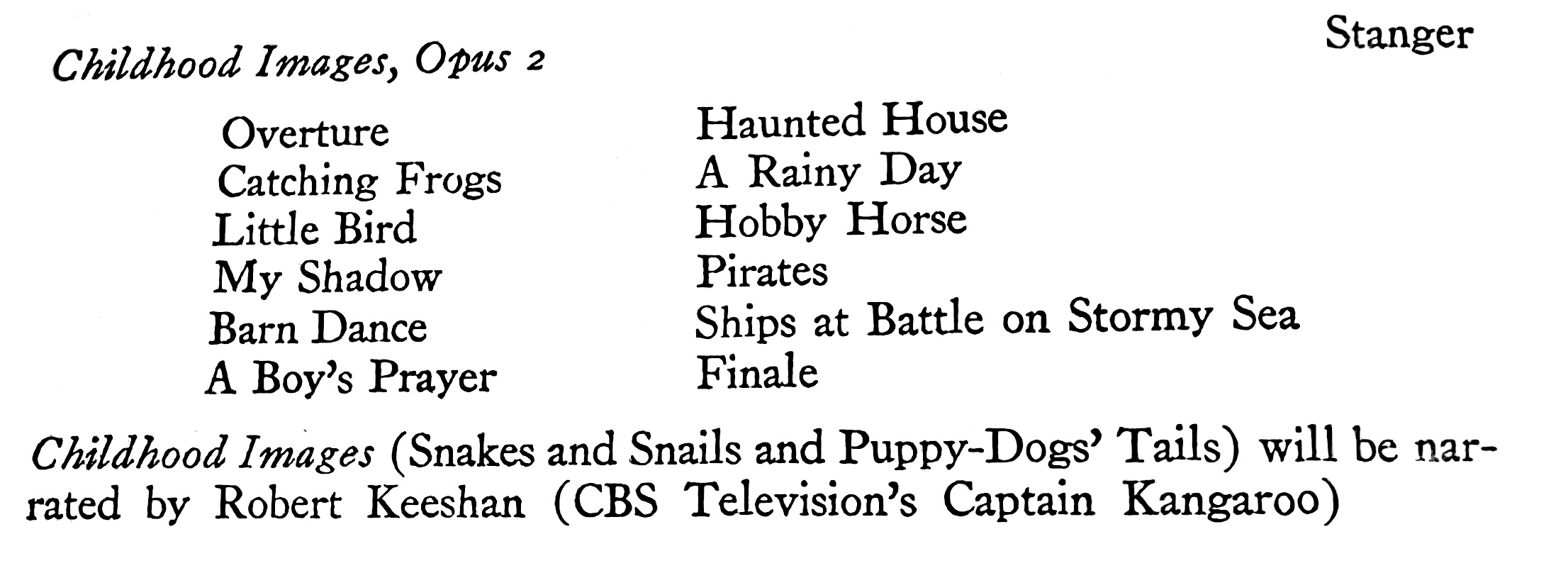
Hugh DeSamper mentioned he was a friend of Bob Keeshan — Captain Kangaroo — whose specialty included performing with symphony orchestras.

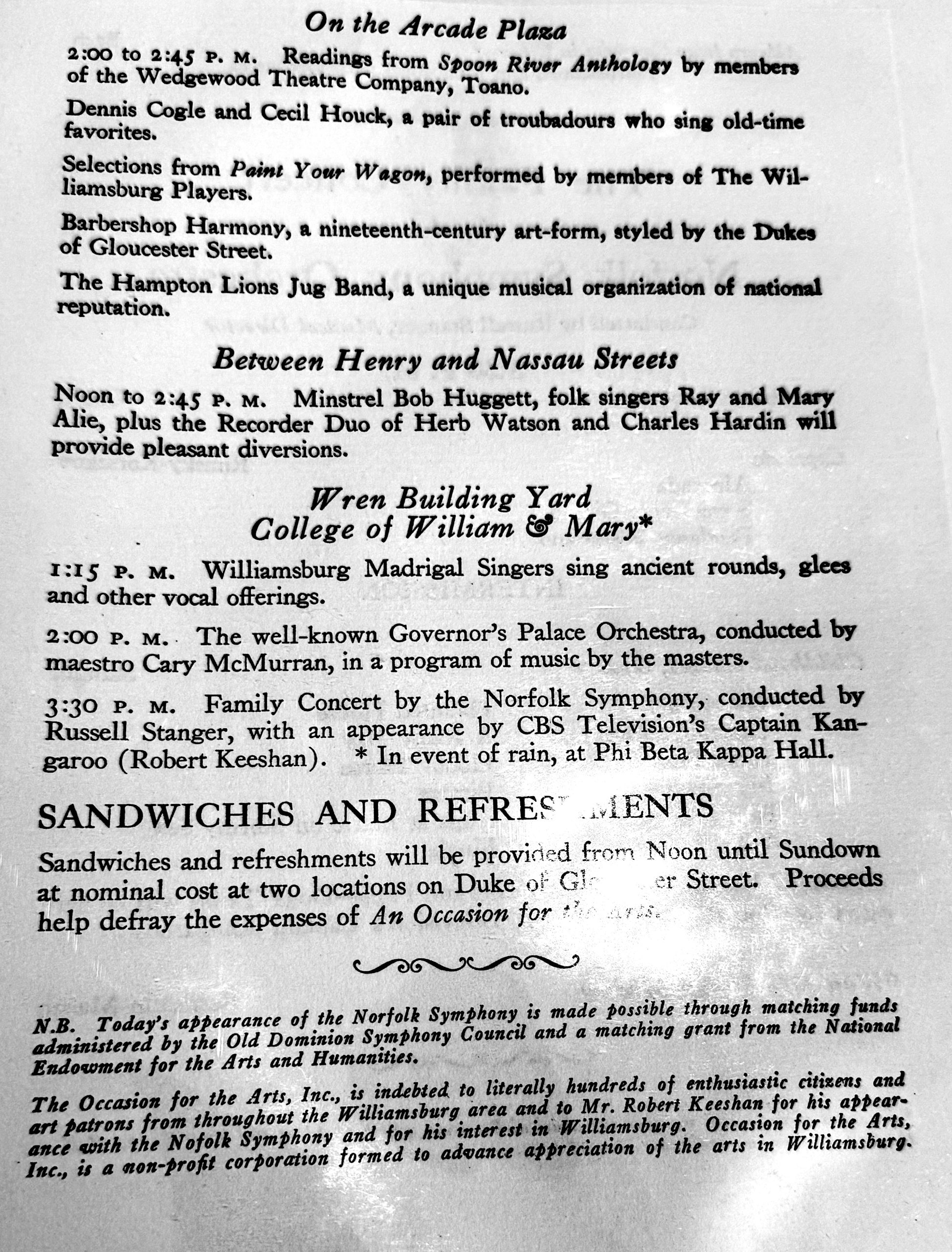
Captain Kangaroo came — gratis — and it was a wow. Colonial Williamsburg comped his accommodations at the Williamsburg Inn.

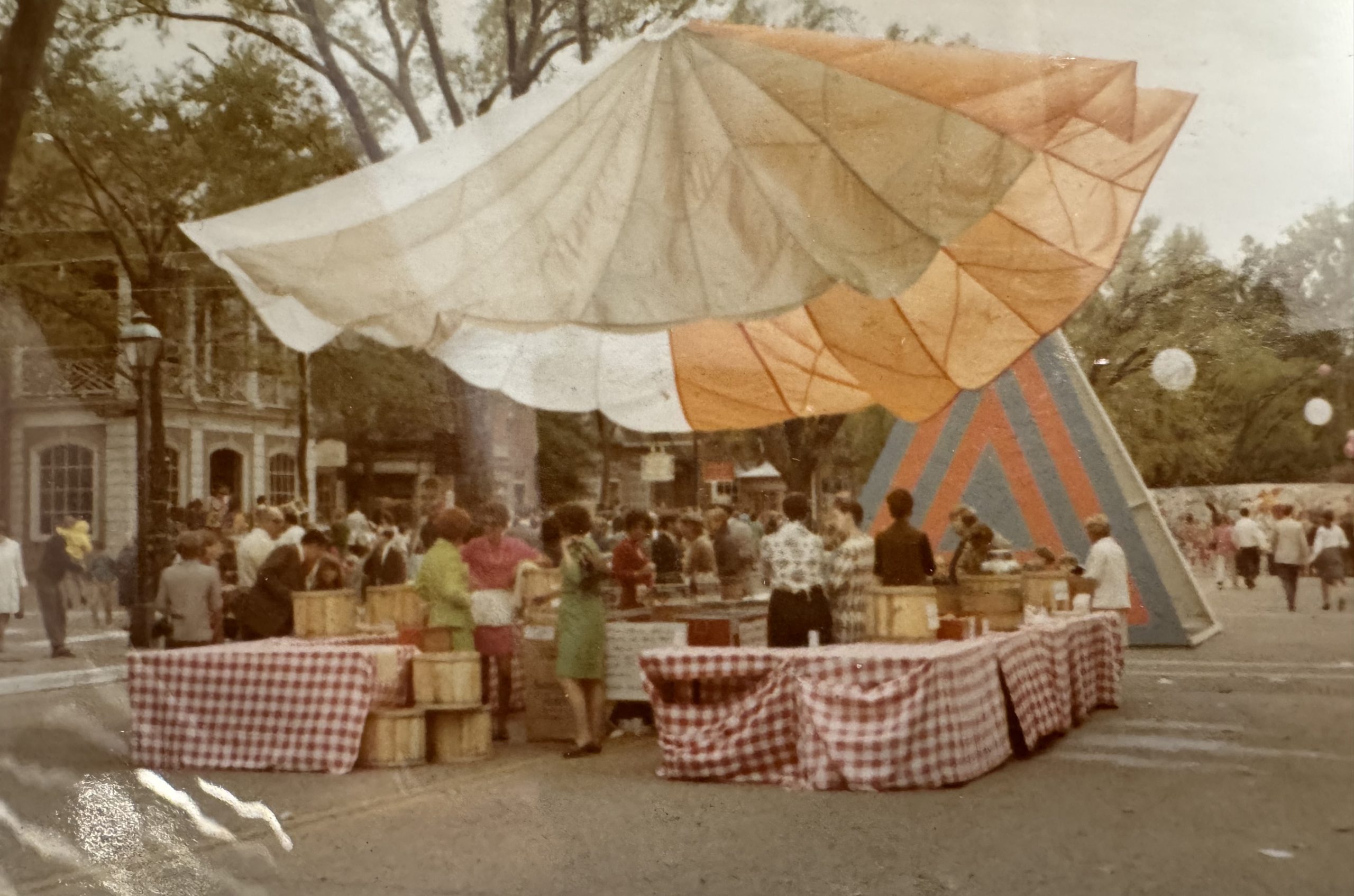
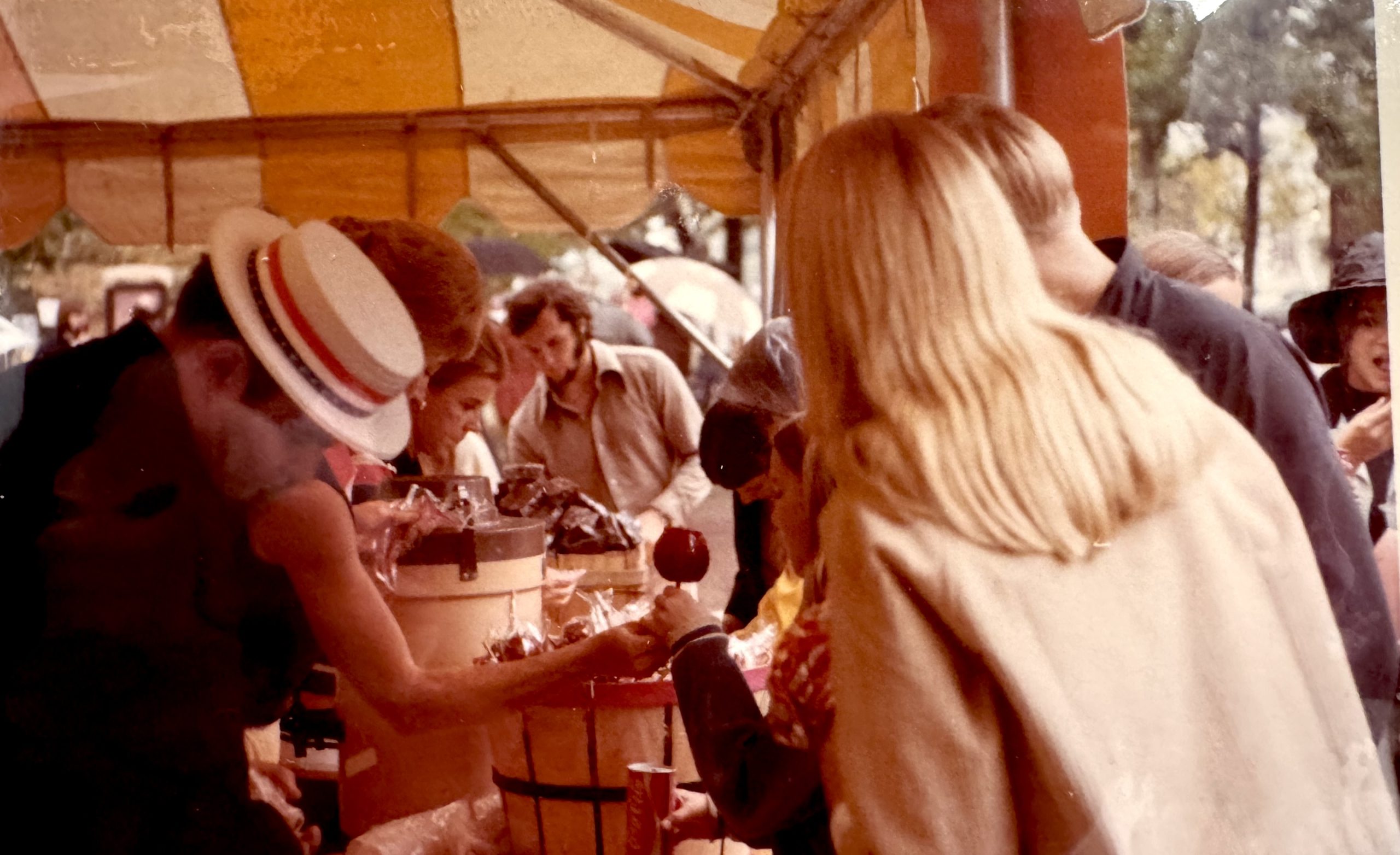
Food service was handled by volunteers. We made roast beef sandwiches, crab cake sandwiches, and turkey sandwiches — selling them for 25 cents.

Huge mistake.

We made far too many and ended the day selling them for five cents each.

Ricks had to travel to Texas two weeks before the festival but returned the night before it opened.

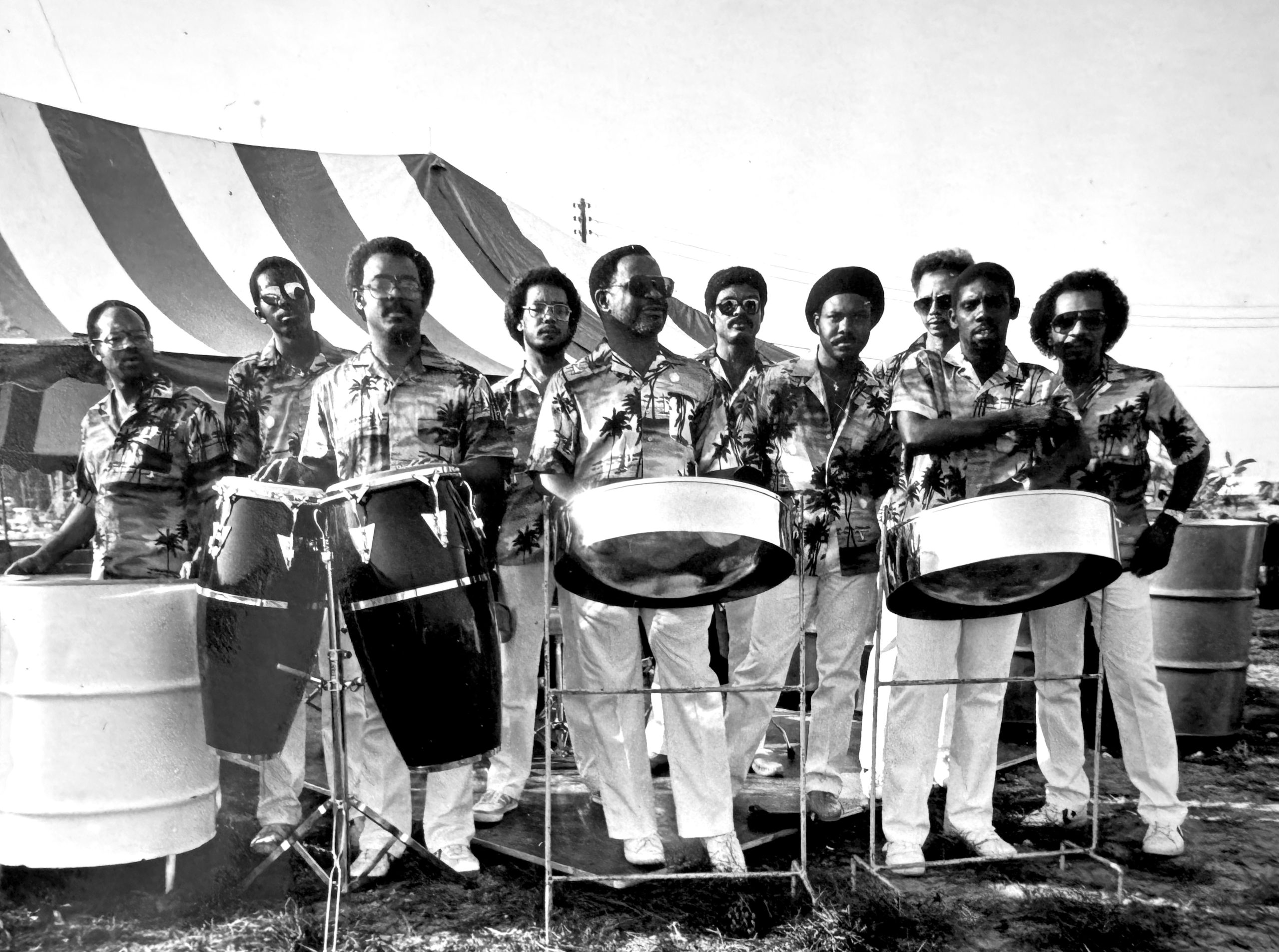
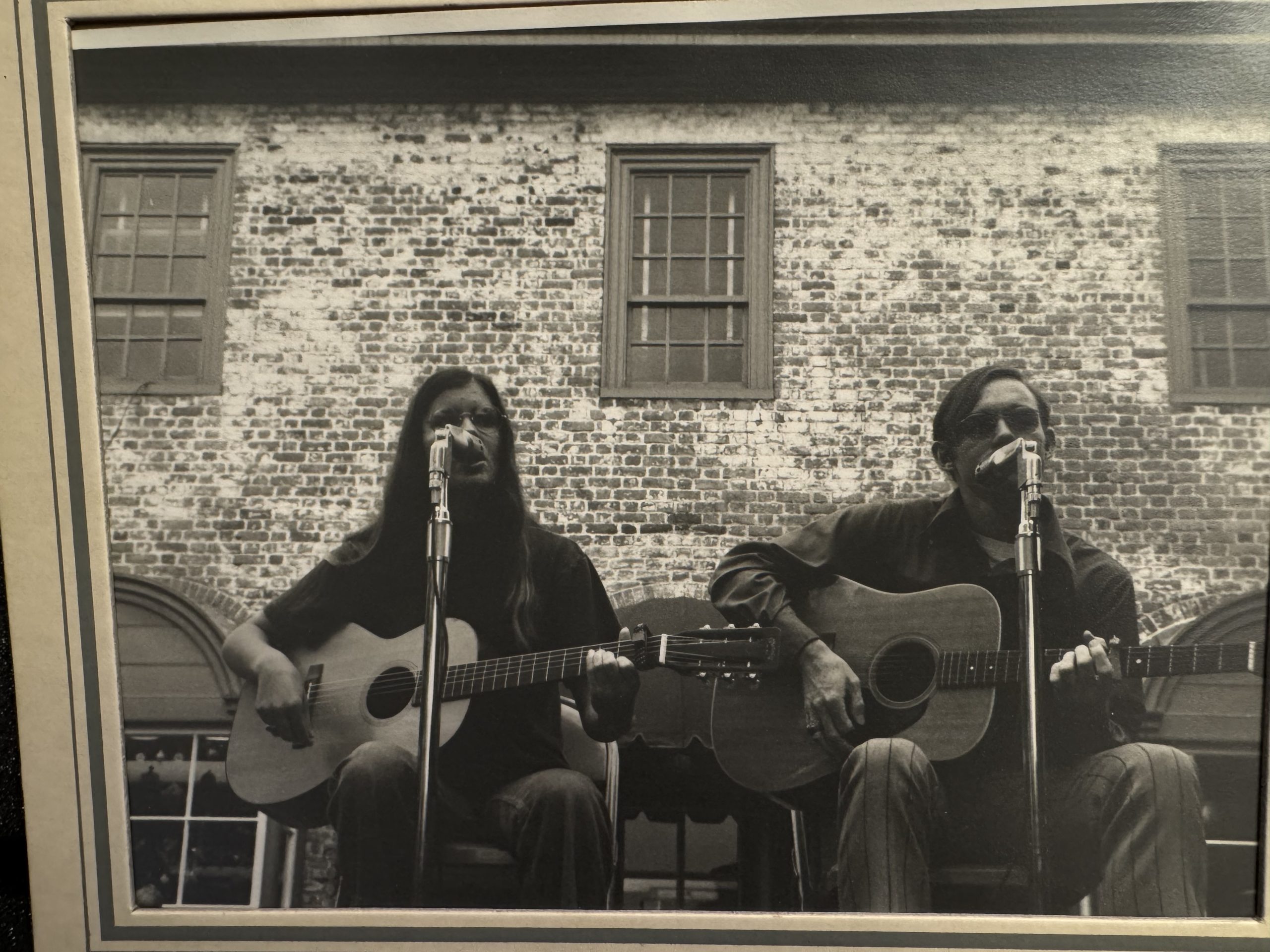
The first year had only two stages during the day prior to the Symphony concert. One was near the Brafferton building and the other was on Dog Street.

We had six acts to pay performers’ fees, which would take about $5,000 out of our cash. I sent letters asking them to donate the fee back.

Four sent checks back. One sent half. The sixth wrote an indignant letter saying, essentially, “How dare you?”

We didn’t invite him again.

The longest-running hero of AOFTA is Richard Stratton, master electrician, who joined in the second or third year and still serves.

After the first festival in 1969 we asked:

Was it good? Yes.

Should we do it again? Yes.

We agreed we should add more stages and more entertainment.

Someone suggested a beer garden.

Virginia’s alcohol laws made this extremely complicated, but we managed to secure the license just a week before the 1970 festival.

Food operations were eventually handled by the Williamsburg Lions Club, which helped make food and beverage a significant revenue source for the festival.

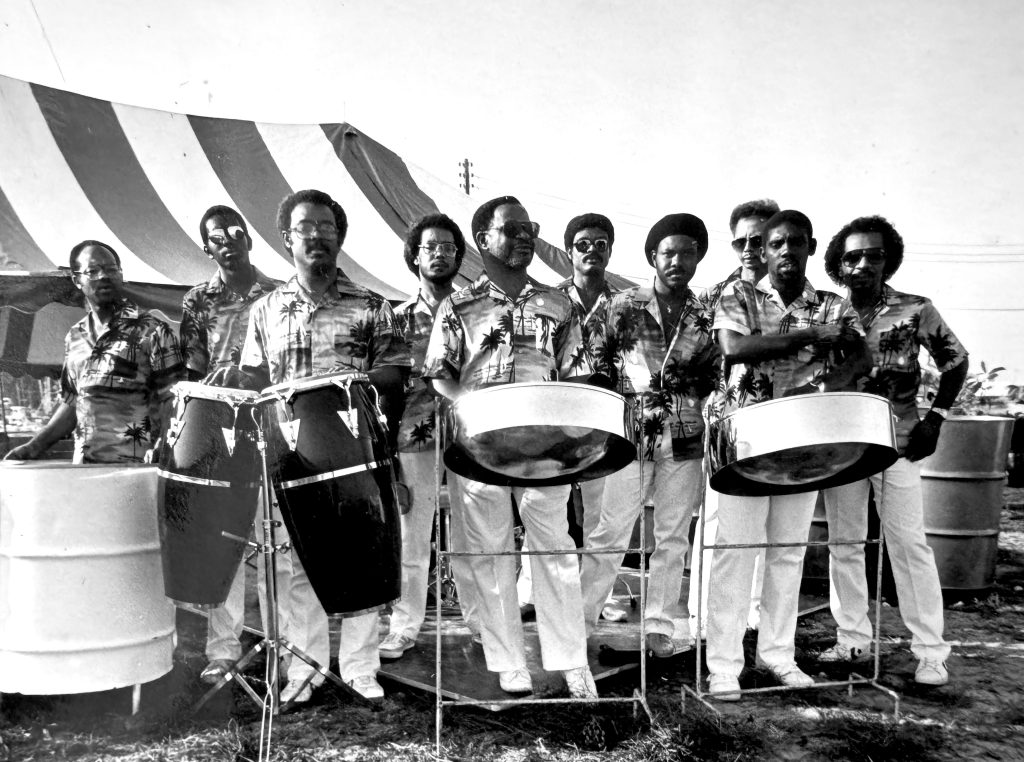
At one point we were producing up to ten stages across the event footprint.

In addition to outdoor performances we used indoor venues including the Wren Chapel and the Great Hall of the Wren for classical music and dance.

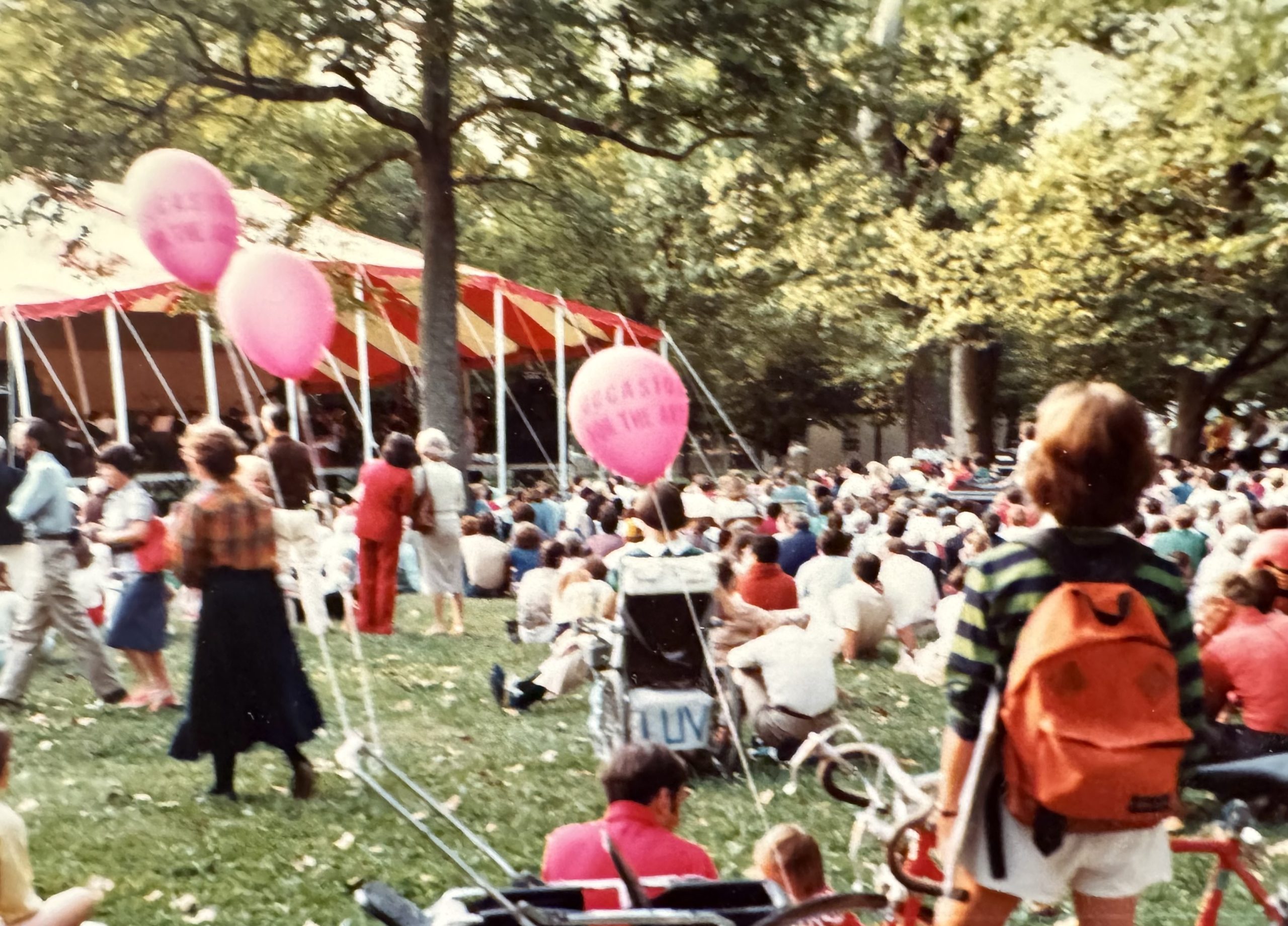
For many years the Symphony capper performance took place in front of the Wren Building. Later contracts specified that under certain weather conditions the performance would move inside Phi Beta Kappa Hall.

I had a binder of photographs from 1969 that helped us choose locations for the beer garden. The parking lot behind the information center worked best.

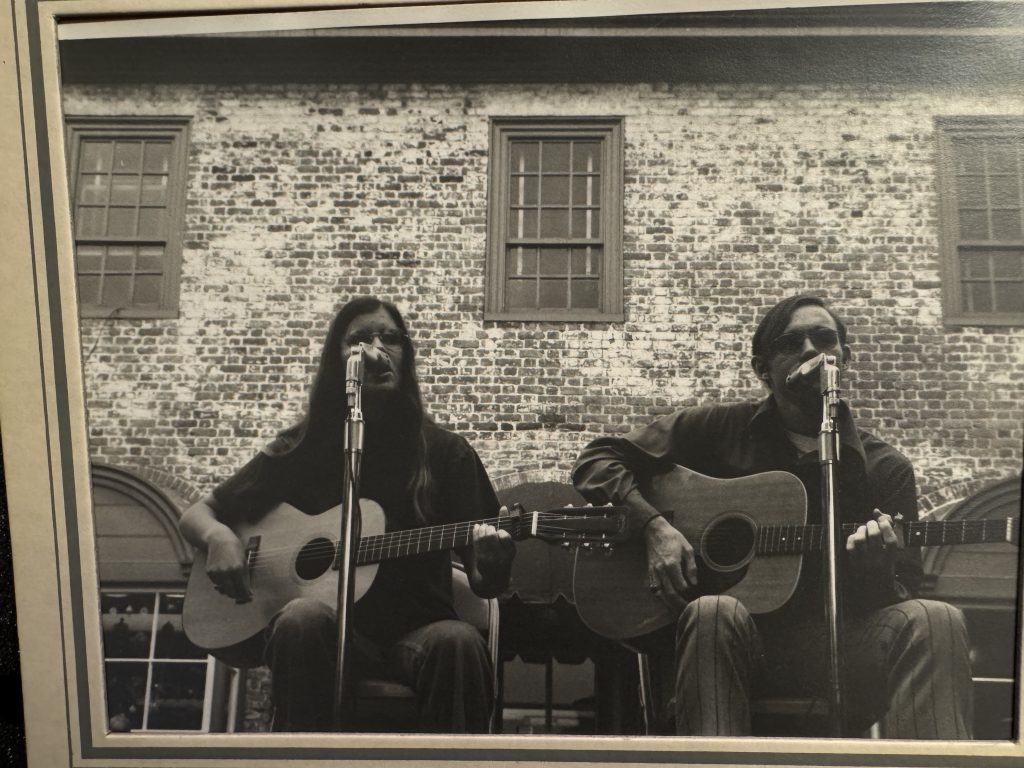
The beer garden in 1970 contained one of the new stages. Peter Eisenacher, a German immigrant pianist, had a Dixieland band called The Jazz Factory that played frequently at the Cascades.

Ann Rowe, a principal soprano of the Palace Concerts and Bruton Parish Choir, also performed.

For many years I played in the beer garden with a Dixieland band every afternoon until the Symphony performance.

Over time the band evolved into the Chesapeake Bay Bearcats, a group of about thirty musicians who still play AOFTA today.

Mary Gonzales came on board about 1972.

The festival has been rained on several times, but it was only rained out once — in 1974, when Mary Gonzales was producer.

We also introduced the Friends program, where supporters pledged in advance to purchase art from exhibitors. At the end of the day artists could redeem those purchase placards for cash.

Artists’ tents were introduced rapidly in later years, replacing the original zig-zag display walls.

Over time the festival expanded north along Boundary Street and connected to the library area.

The weather always played a critical role in attendance and in the financial success of both artists and the organization.

Knowing that many performing artists live hand-to-mouth, we tried to pay as many as we could while still maintaining financial reserves to survive rainy years.

My memory is that J. R. Zepkin, Esq., did the legal work to establish us as a 501(c)(3) nonprofit corporation, along with his partner Joe Abdelnour.

Over the 38 years through 2006, thousands of hardworking volunteers helped produce An Occasion for the Arts each year.

The individuals I have named are only representative of all those who led and worked beside us.

With gratitude for them all – as well as the visual and performing artists who bring so much beauty into our lives.

The arts are a calling – and part of what makes Williamsburg such a special place.

* Historical note

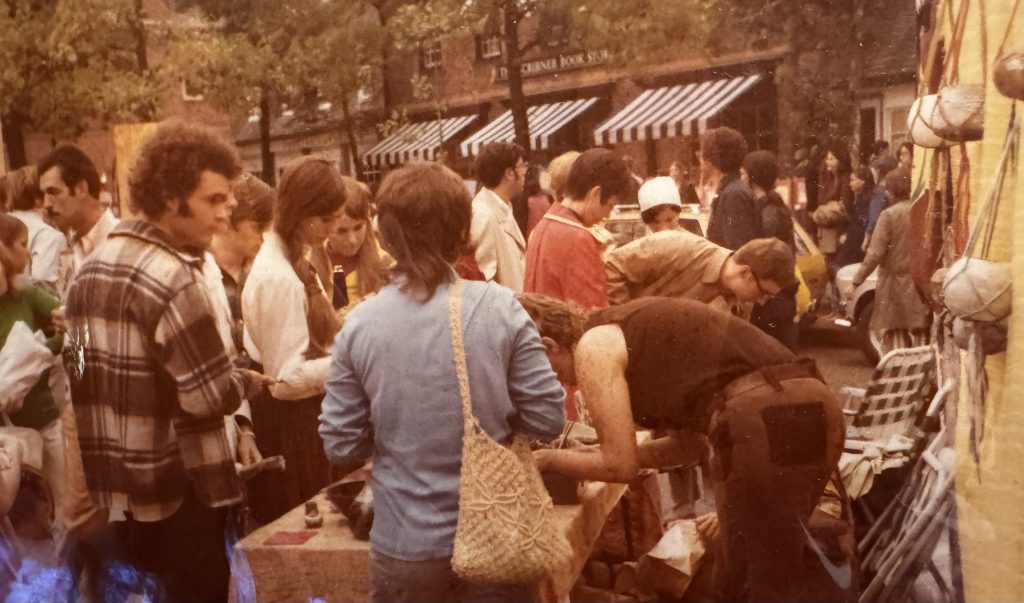
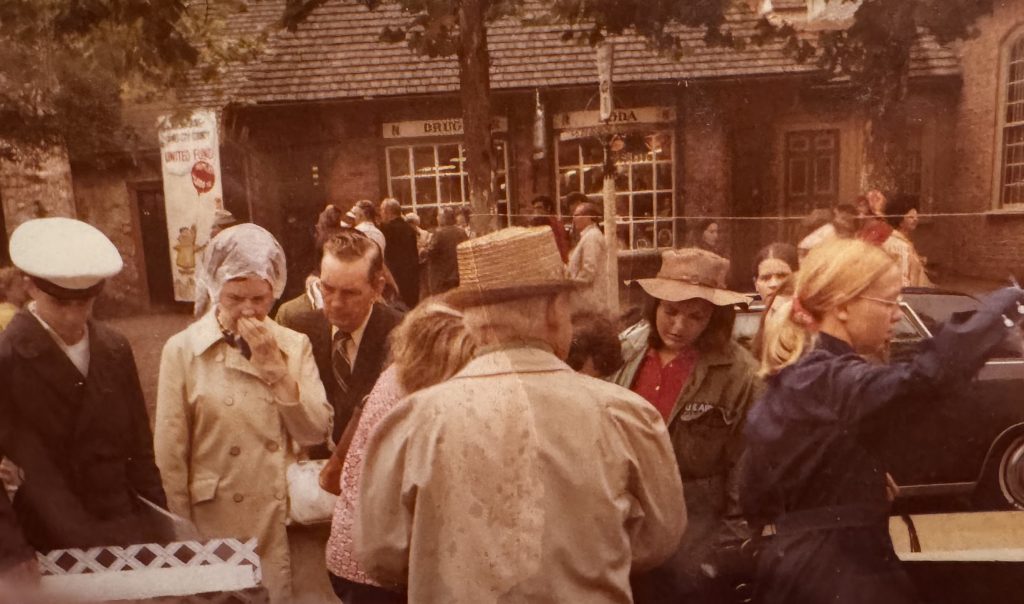
The early written history of An Occasion for the Arts was compiled in the early 2000’s by one of the festival’s founders, Jim Anthony. The images presented here were gathered from historical materials stored in the William & Mary Special Collections related to the festival. Captions, dates, and source citations remain incomplete, and portions of the text have been lightly edited for clarity. Additional research may refine and expand this record over time. If you are interested in helping develop this history, we welcome volunteers—please reach out.

Timeline

1969

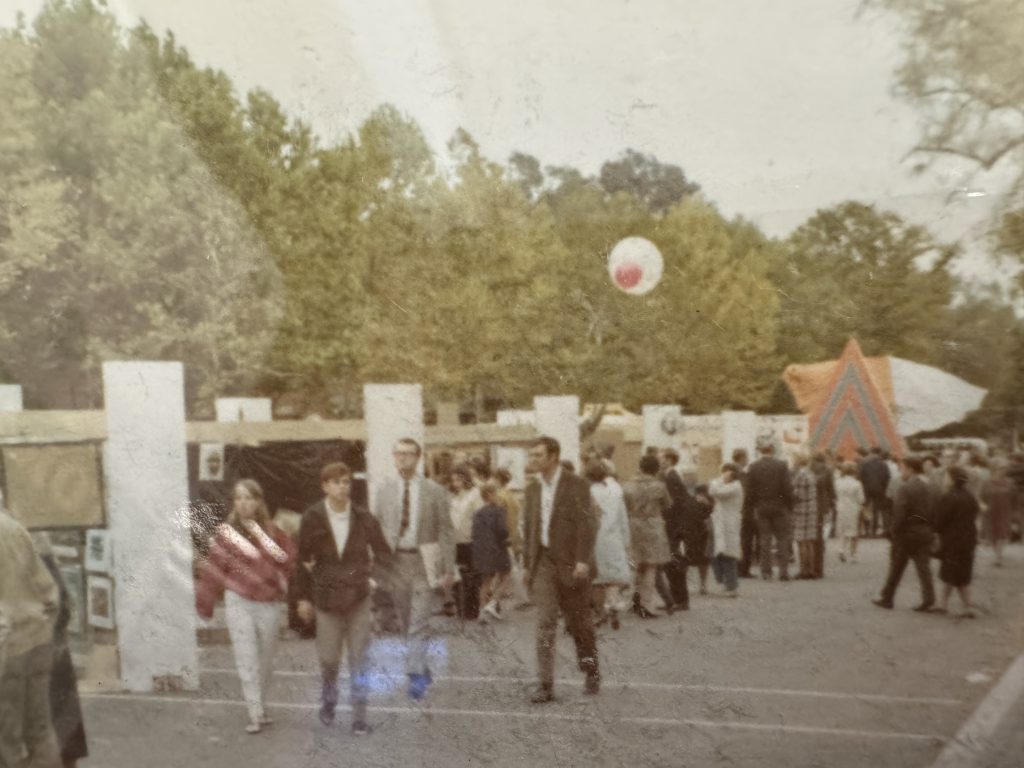
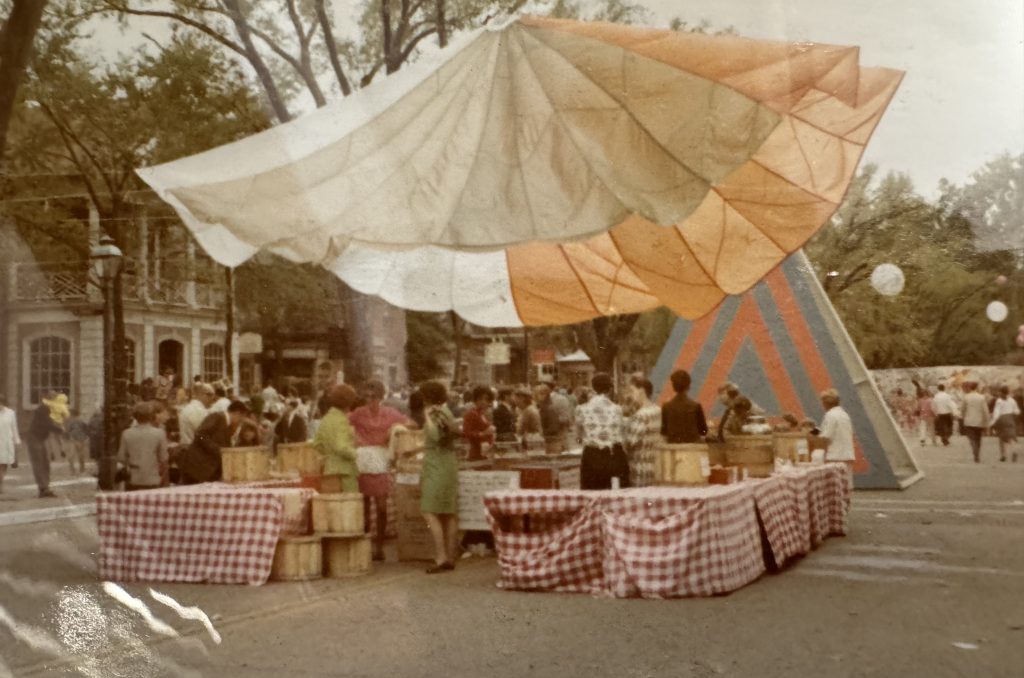
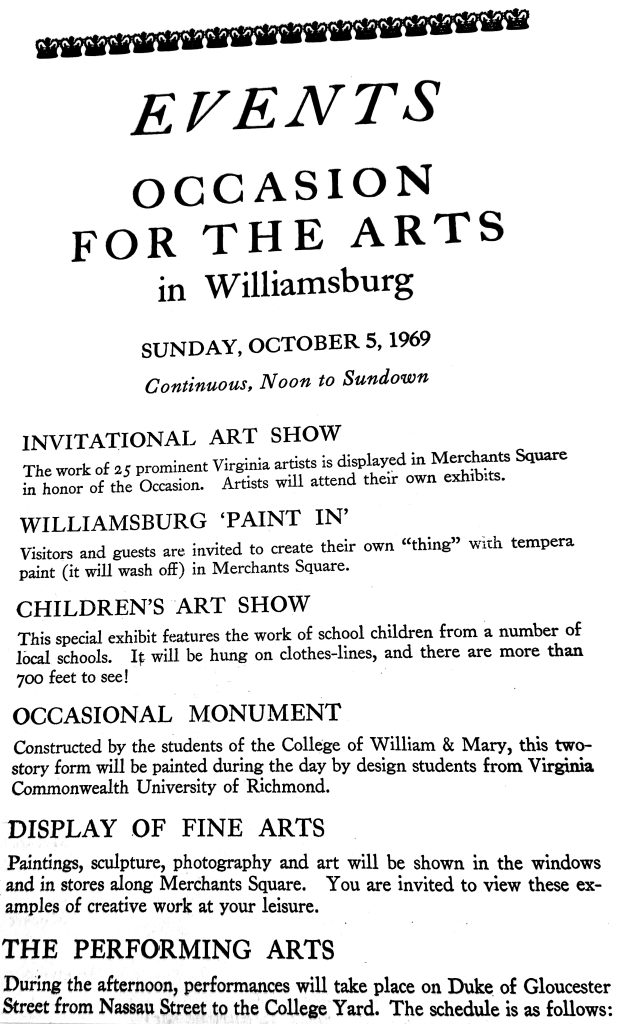
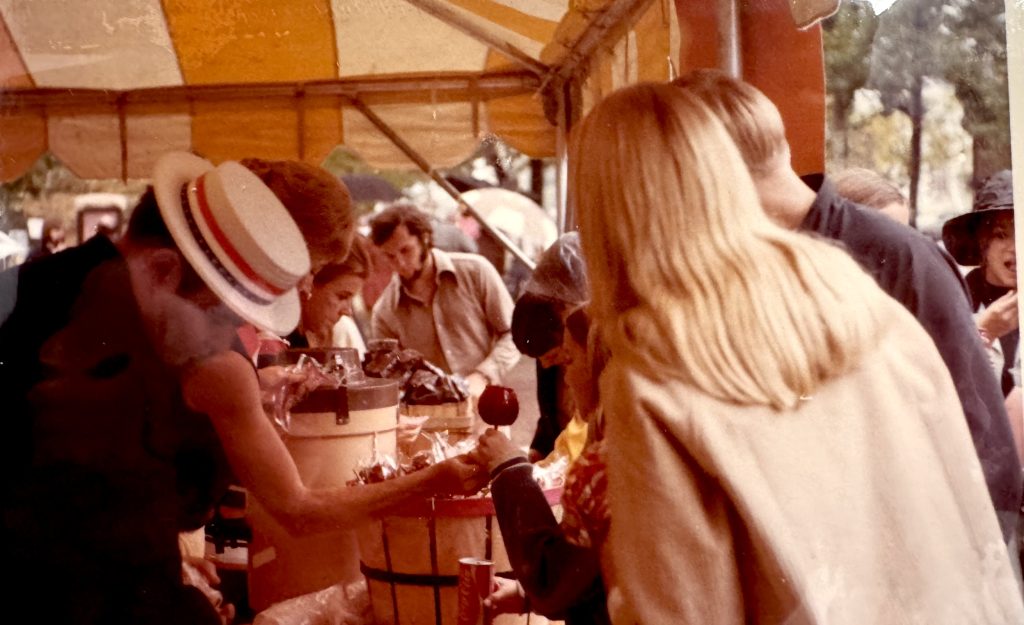
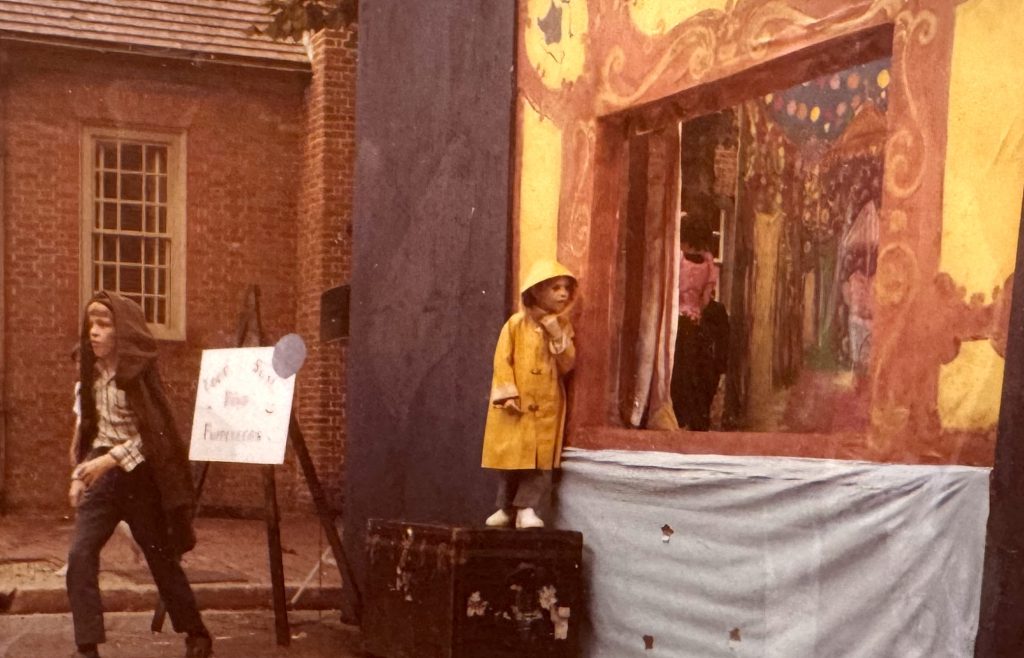
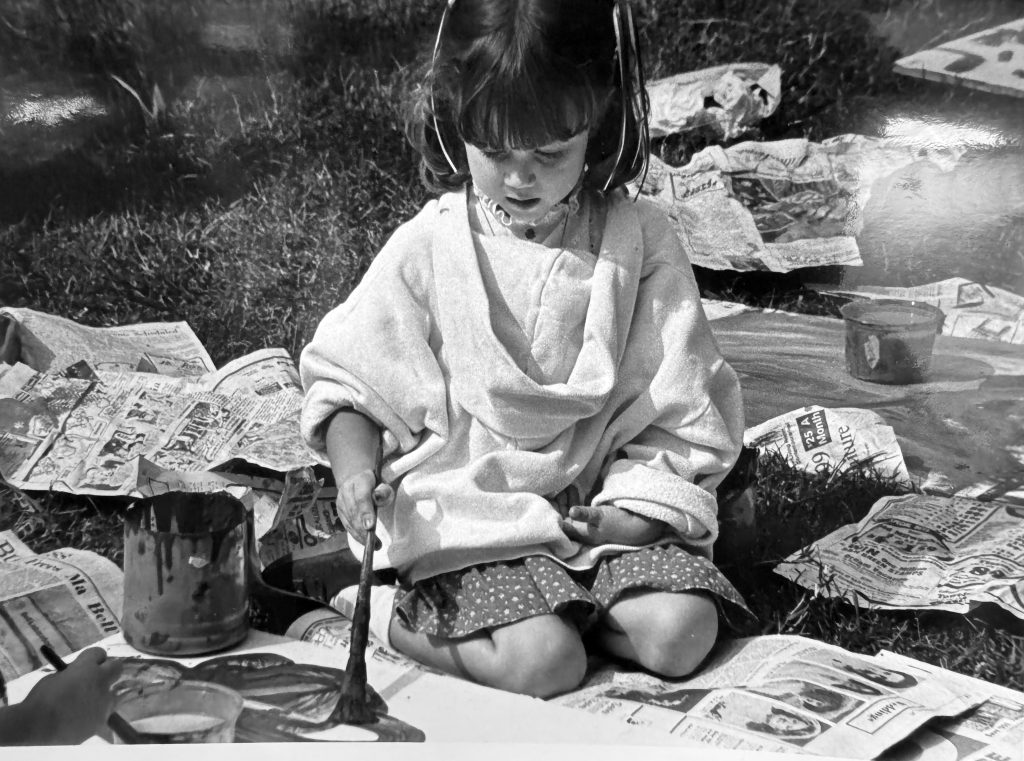
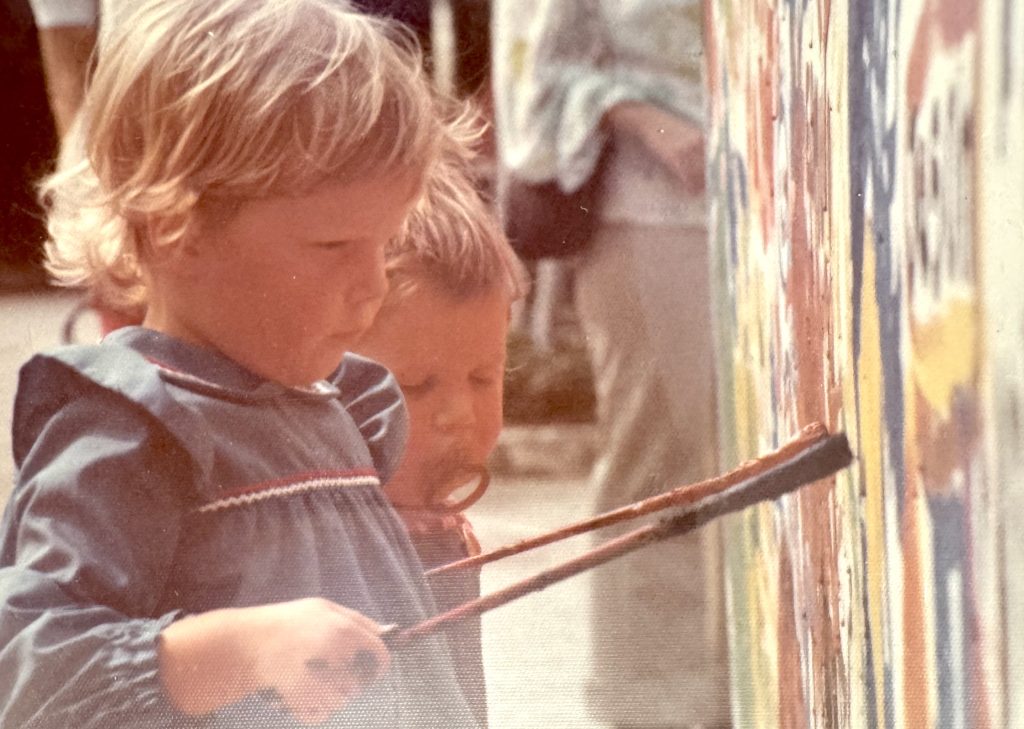
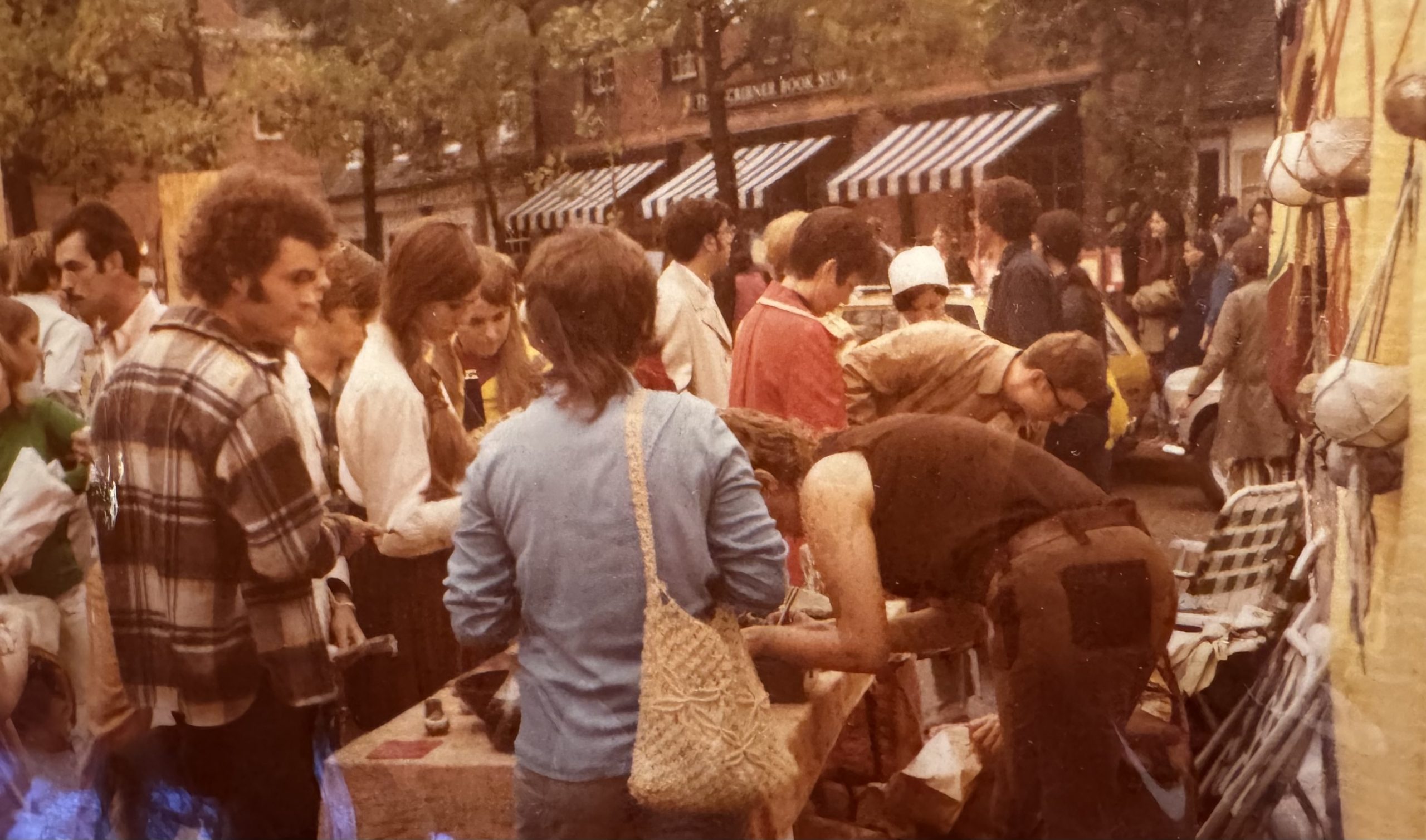
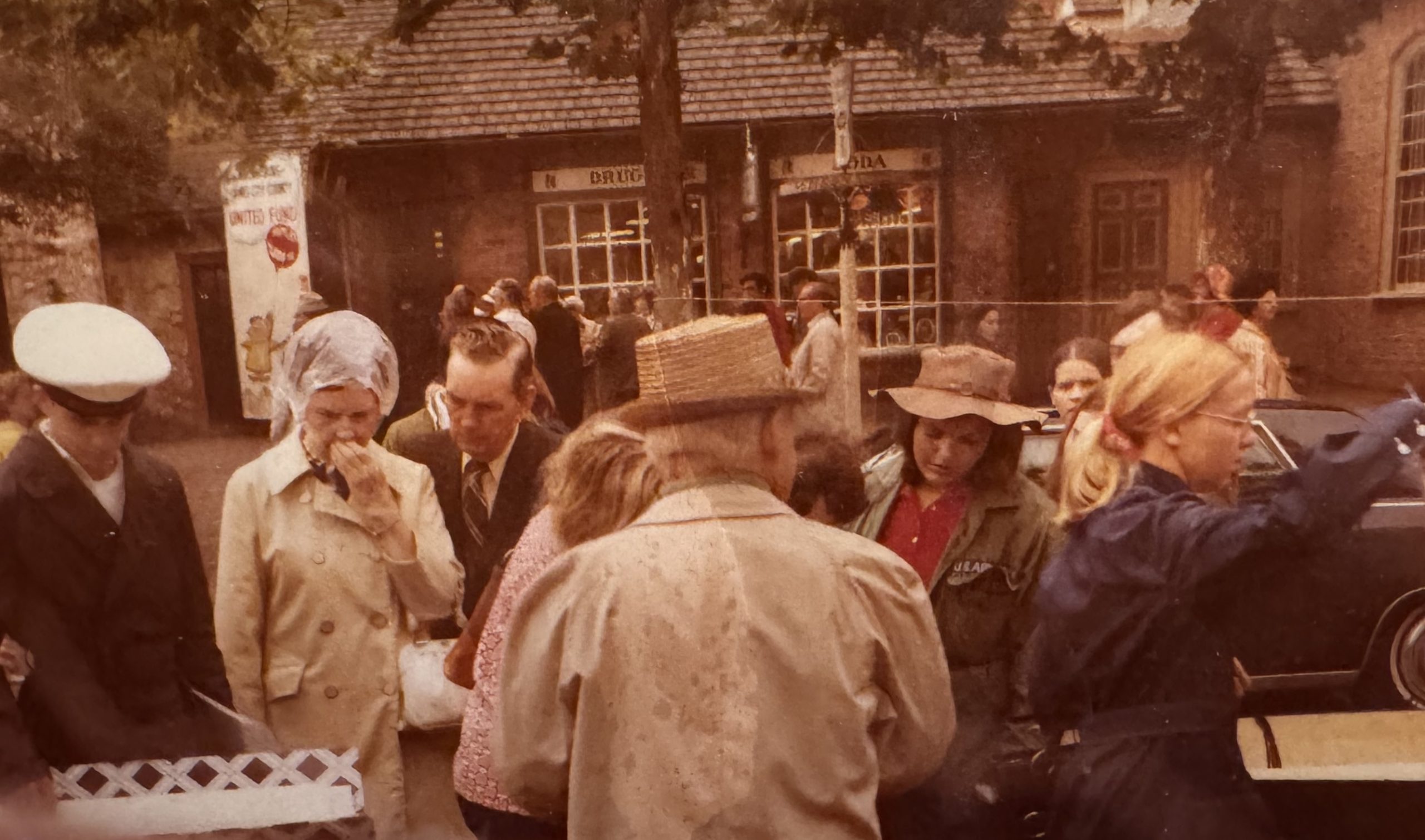
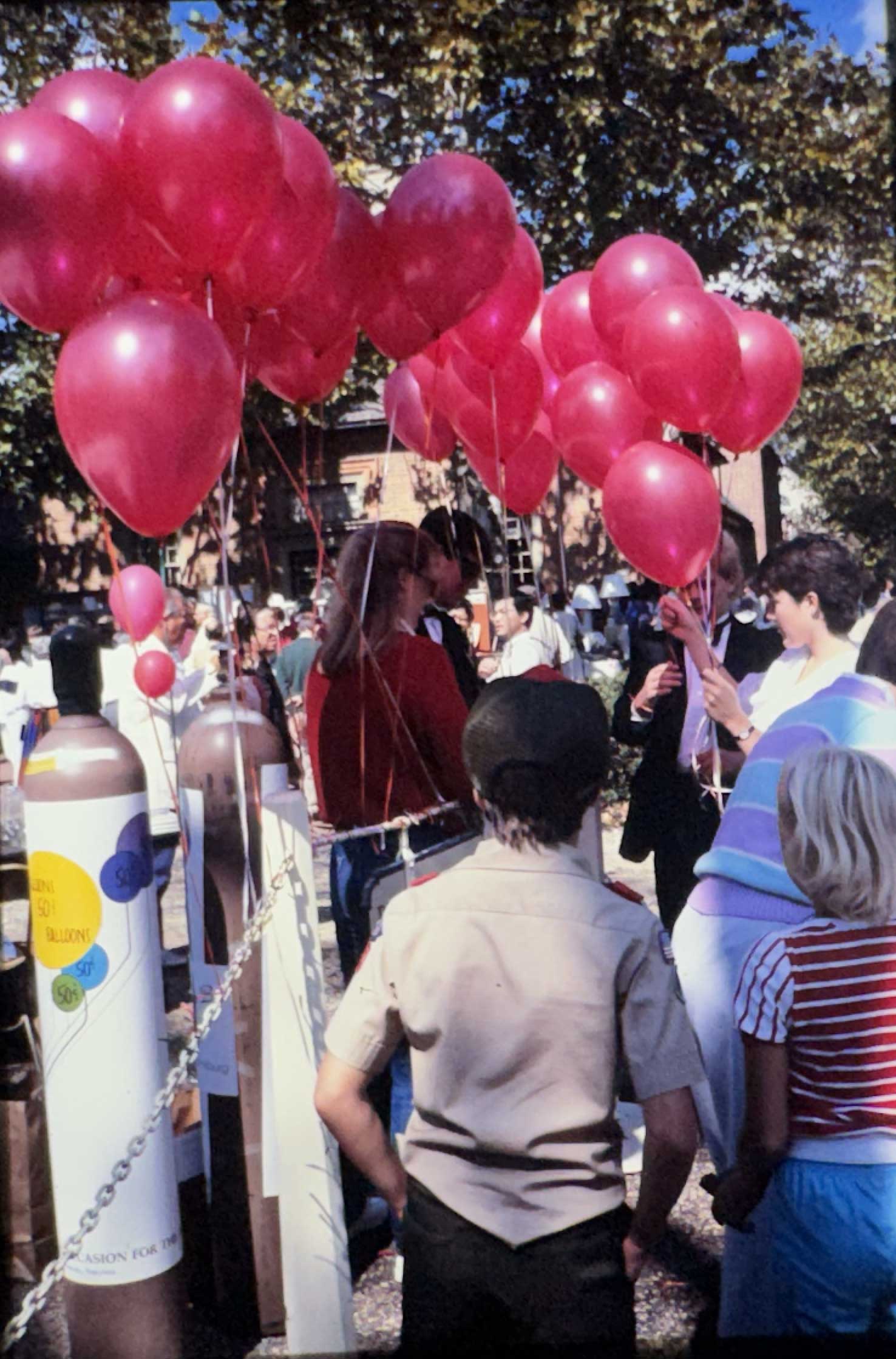
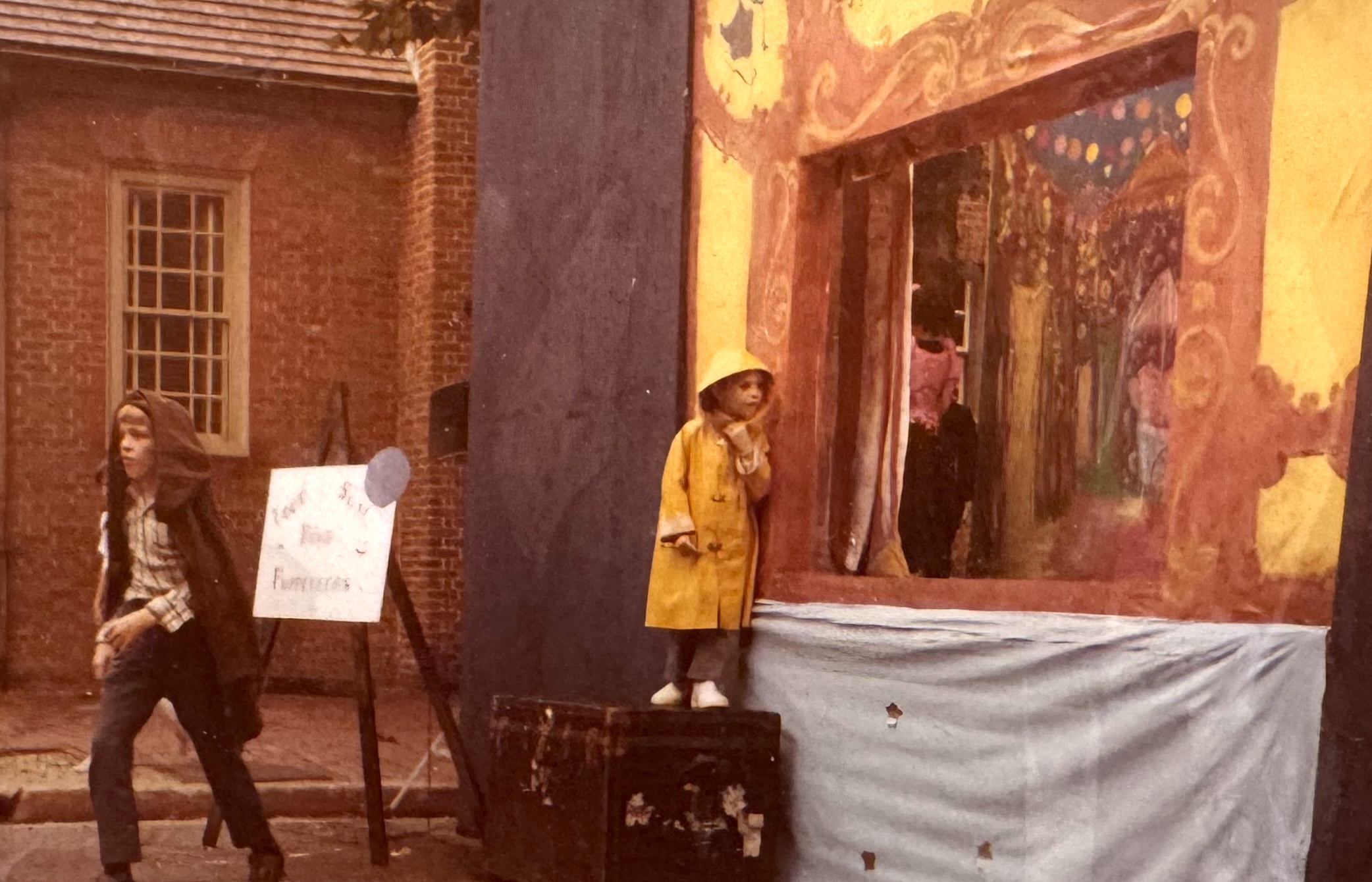
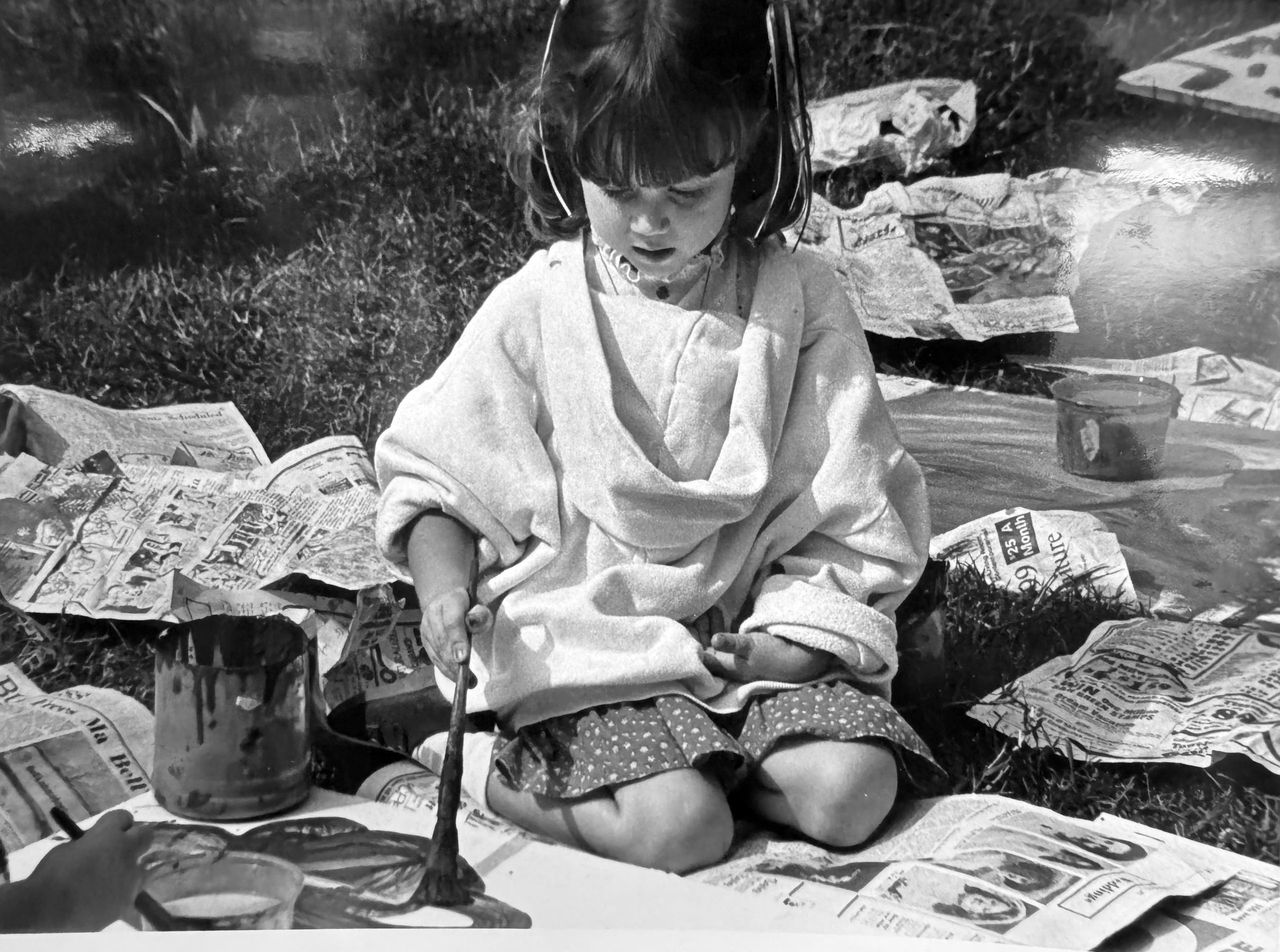
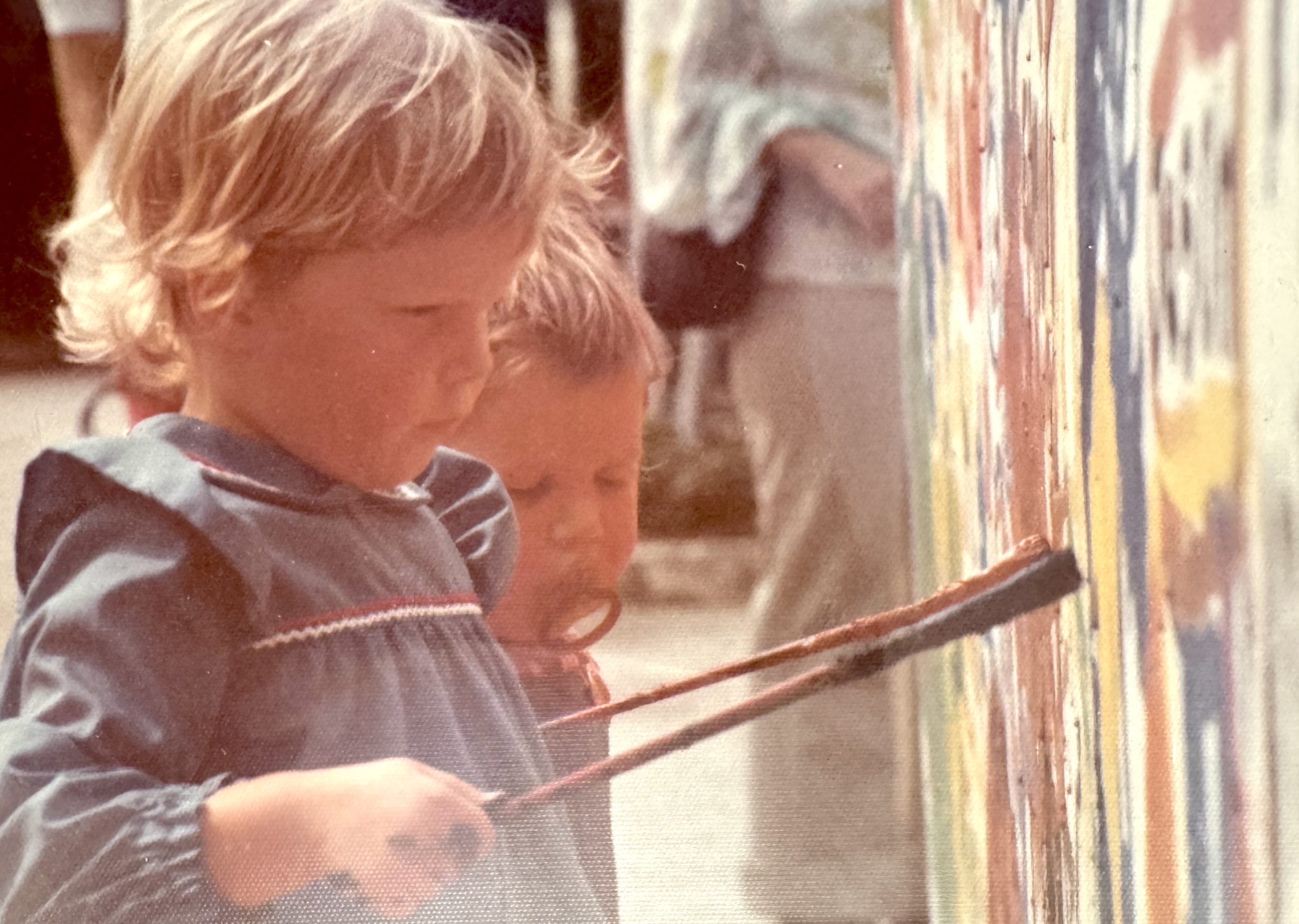
23 artists and 13,000 guests. A clothesline exhibition of children’s art was woven from tree to tree, and a “Paint-In” invited children to create work on panels arranged throughout the area. The Norfolk Symphony presented a family concert featuring Captain Kangaroo narrating Snakes, Snails & Puppy Dog Tails. Food included apples and cookies from Colonial Williamsburg. Programs were printed on a single sheet and nailed to trees along Duke of Gloucester Street. Carlton Abbott designed zig-zag chicken wire display racks for artists — used for years until artists began bringing their own tents.

1974

Expanded to 76 artists and 5 performance stages.

1982

The Fife & Drum Corps began opening the festival, leading visitors at 5:00 p.m. to the College of William & Mary campus for the Symphony concert.

1987

Grew to 90 artists and 7 stages across the college campus.

1994

Hot air balloon rides offered in the Sunken Garden at William & Mary.

2008

Introduced Art of Food at the Williamsburg Community Center; Virginia chefs were featured, and an ice sculptor carved a horse from a block of ice using a chainsaw.

2009

Expanded to 204 artists and 5 stages on Boundary Street.

2010

Plein air painting and contemporary artist demonstrations presented on the DeWitt Wallace lawn; Symphonia performed Saturday evening.

2016

Festival expanded to three days.

2018

Celebrated the 50th anniversary of An Occasion for the Arts.

2020

First Virtual An Occasion for the Arts, featuring over 90 artists selling work online and a two-day performing arts livestream.

2026

Board reformed and the festival renewed following six successful years and recovery from a hurricane cancellation.